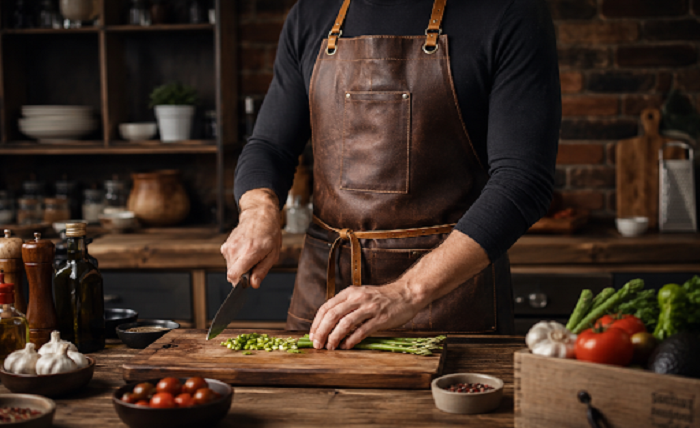
If you love spending time in the kitchen, whether you are perfecting a family recipe, experimenting with new flavors, or cooking for a crowd, you already know how quickly things can get messy. Grease splatters, sauces bubble over, and your clothes pay the price every single time.
A good apron solves that problem, but not all aprons are made equal. An expert leather cooking apron built from full-grain cowhide offers a level of protection, durability, and style that no fabric alternative can come close to matching.
What Makes Leather the Smarter Choice
Cotton and canvas aprons are the default choice for most home cooks, and they work fine for light kitchen tasks. But when you are cooking seriously, dealing with hot oils, open flames, and heavy sauces, fabric falls short fast. It absorbs grease rather than repelling it. It stains permanently. It wears out after a season of regular use and ends up in the bin.
Full-grain leather works differently. It naturally shrugs off grease and moisture rather than soaking them in. A quick wipe after cooking and it looks as good as before you started. It holds its shape through years of heavy use and develops a beautiful, worn-in patina over time that fabric simply cannot replicate.
For anyone who cooks regularly and takes pride in what they make, the switch to leather is one of those upgrades that makes immediate, obvious sense.
Features That Matter Most in a Kitchen Leather Apron
Not every leather apron is worth your money. Here is what to look for before you buy:
Full-Grain Leather Only
Always check the leather grade. Full-grain leather retains the full natural strength and density of the hide and holds up through years of kitchen use. Bonded leather, made from leftover scraps pressed together, cracks and peels within months. It is not worth saving.
Cross-Back Straps
If you spend long hours at the stove, a cross-back strap design makes a real difference. Instead of all the weight sitting on your neck, it spreads evenly across both shoulders. After a few hours of cooking, that comfort matters more than most people expect.
Deep Front Pockets
A kitchen apron should work like a tool belt. Deep pockets keep your kitchen towel, thermometer, tasting spoon, and anything else you need within arm’s reach so you are never stepping away from the stove at the wrong moment.
Solid Hardware
Look for brass or stainless steel buckles and rings. Cheap hardware corrodes quickly in a kitchen environment with regular exposure to steam, heat, and cleaning products.
How to Keep Your Leather Apron in Great Shape
One of the biggest advantages a genuine leather apron has over fabric is how easy it is to maintain with a simple routine. After every cooking session, wipe the apron down with a dry cloth while it is still warm. This removes surface grease before it has a chance to set.
For tougher grease spots, sprinkle cornstarch directly on the stain, let it sit for 20 to 30 minutes to draw the oil out, then brush it off gently. Every month or two, apply a beeswax or lanolin-based leather conditioner across the full surface, let it absorb for 15 minutes, and buff off the excess.
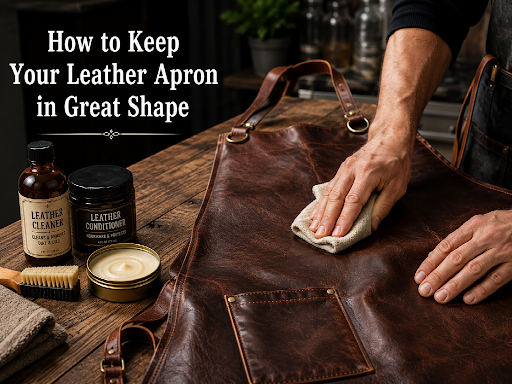
Three things to always avoid: machine washing, drying with direct heat, and folding for storage. Always hang your apron flat and let it air dry completely between sessions.
A Kitchen Investment That Lasts for Years
A quality leather cooking apron is one of those rare kitchen purchases that genuinely gets better the longer you own it. The leather softens and molds to your movements. The patina deepens. And unlike a fabric apron that needs replacing every year or two, a well-made leather apron will still be going strong a decade from now.
For anyone who loves cooking and wants gear that keeps up with how seriously they take it, a leather cooking apron is one of the best investments you can make in your kitchen.