You think you are drinking something with zero caffeine. But you are not. Decaf coffee still has caffeine in it. Not a lot. But enough to matter for some people.So how much caffeine in decaf coffee exactly? Let us break it all down in plain words.
What Is Decaf Coffee Anyway?
Decaf is short for decaffeinated. It means the coffee went through a process to remove most of the caffeine. But here is the key word: most.Nobody removes all of it. That is just not how it works. The beans still hold onto a little caffeine no matter what method is used.Think of it like squeezing a wet sponge. You get most of the water out. But the sponge is never fully dry.
Decaf coffee starts as regular coffee beans. Then companies put those beans through a caffeine removal process before roasting. The beans lose most of their caffeine. But a small amount stays behind.
How Much Caffeine Is Actually in Decaf?
Here is the part people get wrong. They think decaf means no caffeine. It does not.A regular cup of coffee has around 80 to 100 milligrams of caffeine. Some cups have even more. A decaf cup has much less. But it is not zero.The average decaf cup has about 2 to 15 milligrams of caffeine. That is a wide range. It depends on the brand, the bean, and the method used to remove the caffeine.
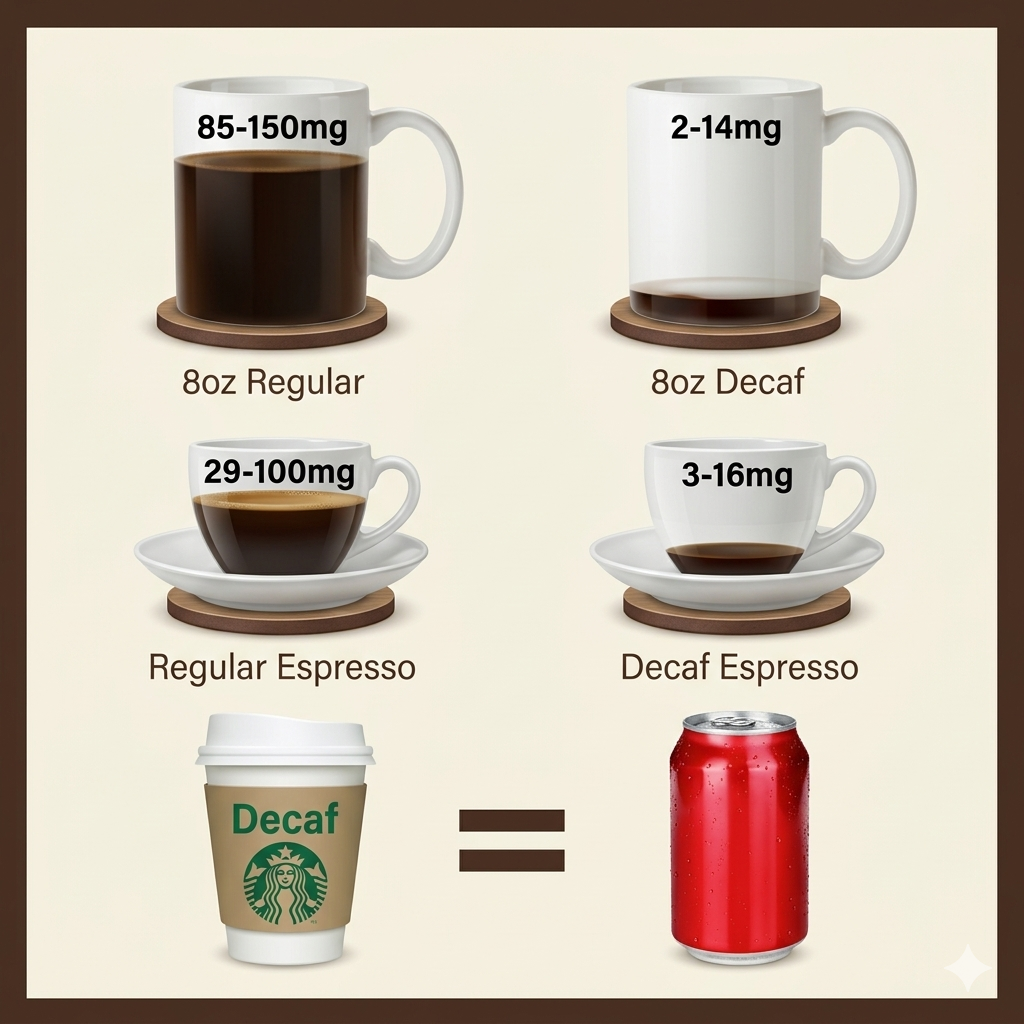
Some cups are closer to 2 mg. Some push up to 15 mg or a bit higher. If you drink four or five decaf cups in a day, you could be getting 30 to 60 mg of caffeine without even knowing it.
Caffeine in Decaf Coffee: A Simple Table
Here is a quick look at how much caffeine different decaf coffees carry. These are average amounts based on studies and brand testing.
| Coffee Type / Brand | Serving Size | Caffeine Amount |
|---|---|---|
| Average home brewed decaf | 8 oz | 2 to 12 mg |
| Starbucks Decaf Pike Place | 16 oz (grande) | 25 mg |
| Dunkin’ Decaf | 10 oz | 7 to 10 mg |
| McDonald’s Decaf | 16 oz | 8 to 14 mg |
| Folgers Decaf (instant) | 8 oz | 8 to 12 mg |
| Nescafe Decaf (instant) | 8 oz | 3 to 5 mg |
| Death Wish Decaf | 8 oz | 12 to 15 mg |
| Generic store brand decaf | 8 oz | 2 to 10 mg |
| Espresso shot (decaf) | 1 oz | 3 to 16 mg |
These numbers can vary. Every bag of beans is a little different. But this gives you a real picture of what you are actually drinking.
Why Does Decaf Still Have Caffeine?
Good question. The answer is simple. It is impossible to remove 100% of caffeine from a coffee bean. The caffeine bonds to the bean at a deep level.The decaf process gets rid of a lot. Usually 97% or more. But that leftover 3% or less still adds up when you are drinking multiple cups.
The FDA actually has rules about this. A coffee can legally be called decaf if at least 97% of the caffeine has been removed. So companies hit that target. But the remaining amount is still real.
How Do They Remove the Caffeine?
There are a few different ways companies take caffeine out of coffee. Each method works a little differently. And each one leaves behind a slightly different amount of caffeine.
The Swiss Water Process
This one uses only water. No chemicals at all. The beans soak in hot water. The water pulls out the caffeine along with other stuff. Then the water goes through a filter that traps the caffeine. The filtered water goes back over fresh beans.
This method removes about 99.9% of the caffeine. It is one of the cleanest methods. And it tends to leave behind very little caffeine compared to others.
The Solvent Method
This uses chemicals like ethyl acetate or methylene chloride. The chemical binds to the caffeine and pulls it away from the bean. Then the bean gets rinsed and dried.
This method is common because it is cheap and fast. It removes about 97% of the caffeine. So a bit more stays behind compared to Swiss Water.
The CO2 Method
This one uses pressurized carbon dioxide. The CO2 pulls out the caffeine but leaves most of the flavor compounds alone. It works really well and removes a high percentage of caffeine. But it costs more. So fewer brands use it.
Does the Type of Bean Matter?
Yes. It really does. Robusta beans naturally have more caffeine than Arabica beans. If a company uses Robusta beans to make their decaf, the final product may have more leftover caffeine.
Most high end decaf coffee uses Arabica beans. They taste better and start with less caffeine. So the decaf version ends up with very little.
Cheaper decaf blends sometimes use Robusta. So you might actually get more caffeine from a bargain decaf than from a pricier one.
The roast level matters a tiny bit too. Light roasts actually have slightly more caffeine than dark roasts. But the difference in decaf is very small. It is not worth stressing about.
Who Should Actually Care About This?
Most people can drink decaf and not worry about the small amount of caffeine. But some groups really do need to watch it.
Pregnant people are often told to limit caffeine. Even 10 to 15 mg per cup can add up with multiple servings.
People with anxiety may notice that even small amounts of caffeine make them feel wired or jittery. Decaf might not be as safe as they think if they drink a lot of it.
People with heart issues sometimes get strict advice from doctors to avoid caffeine completely. A few decaf cups a day still adds a little caffeine to the system.
Kids are sensitive to caffeine. A decaf coffee is still not a great idea for young children if they drink large amounts.
Caffeine sensitive people exist. Their bodies react strongly to even tiny doses. They may feel the effects of a 5 mg dose that most people would not even notice.
If you are in any of these groups, it is worth knowing that decaf is low in caffeine. But it is not caffeine free.
Decaf vs Regular: A Real Comparison
Let us put it side by side so it is easy to see.
| Type | Caffeine Per 8 oz Cup |
|---|---|
| Regular brewed coffee | 80 to 100 mg |
| Cold brew coffee | 100 to 200 mg |
| Espresso shot (regular) | 60 to 75 mg |
| Decaf brewed coffee | 2 to 15 mg |
| Decaf espresso shot | 3 to 16 mg |
| Herbal tea | 0 mg |
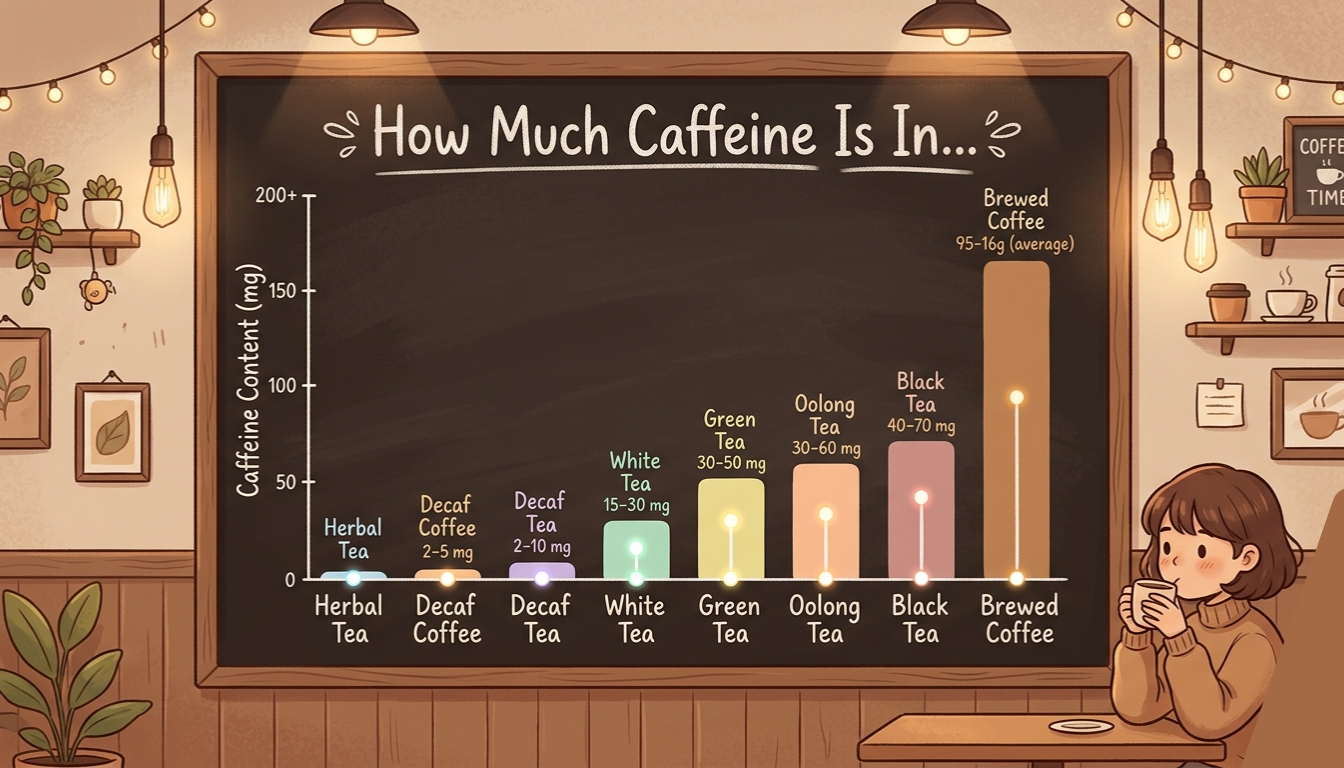
| Green tea | 25 to 45 mg |
| Black tea | 40 to 70 mg |
| Coca Cola (12 oz) | 34 mg |
So decaf has way less caffeine than regular coffee. But it has more than herbal tea. If you truly need zero caffeine, herbal tea or caffeine free water are your only real options.
Does Decaf Keep You Awake?
This is a common question. The short answer is probably not. The amount of caffeine in a decaf cup is very small. For most people, it would not cause trouble sleeping.But everyone is different. Some people are very sensitive to caffeine. Even 5 mg might affect their sleep if they drink it late at night.If you drink three or four decaf cups in the evening and still have trouble sleeping, the caffeine might be a factor. Try switching to herbal tea after lunch and see if it helps.
Also, remember that the act of drinking a hot drink at night can feel stimulating. It is not just about the caffeine. The ritual itself can wake your brain up a little.
Tips If You Want the Least Caffeine Possible
If you want to keep your caffeine as low as you can while still drinking decaf, here are a few things that help.
Pick Swiss Water Process decaf. It removes the most caffeine. Look for this on the bag. Many specialty brands use this method and print it clearly on the label.
Choose Arabica beans. They start with less caffeine naturally. Most quality decaf uses Arabica anyway.
Stick to one or two cups. Even if each cup has only 5 mg, four cups adds up to 20 mg. That is not huge but it is something.
Avoid decaf espresso drinks late at night. A decaf latte has two or more shots of decaf espresso. That could push you toward 20 to 30 mg total.
Read the label. Some brands test their coffee and list the caffeine content. If you see that information, use it.
Common Myths About Decaf
Let us clear up a few things people get wrong.
Myth: Decaf has no caffeine. Not true. It has a small amount. Usually 2 to 15 mg per cup.
Myth: All decaf is the same. Not true. The bean type, the removal method, and the brand all affect how much caffeine is left.
Myth: Decaf is bad for you because of the chemicals used. Mostly not true. The chemical levels left on the beans after processing are very low. Regulatory bodies like the FDA have approved these methods. Swiss Water Process avoids chemicals completely if that is a concern.
Myth: Decaf tastes bad. Not true anymore. Decaf has gotten much better over the years. A well made Swiss Water Process Arabica decaf can taste really good. Not exactly like regular coffee. But close.
Final Thoughts
So now you know the real answer to how much caffeine in decaf coffee. It is not zero. It is somewhere between 2 and 15 mg per cup on average. Some brands land higher. Some land lower.That amount is much less than regular coffee. For most people, it is totally fine. But if you are sensitive to caffeine or need to avoid it for health reasons, it is worth paying attention.Pick a decaf made with the Swiss Water Process. Stick to Arabica beans. Do not drink six cups a day and call it caffeine free. That is the honest picture.Decaf is a good option for people who love coffee but want less caffeine in their life. Just go in knowing it is low caffeine, not no caffeine. That small difference actually matters for some people.
And now you are one of the people who actually knows the truth about what is in your cup.
FAQs About Caffeine in Decaf Coffee
Does decaf coffee have zero caffeine?
No. Decaf coffee still has some caffeine in it. Most cups have somewhere between 2 and 15 milligrams. That is way less than regular coffee. But it is not zero. If you need truly zero caffeine, herbal tea is your best bet.
Why does decaf still have caffeine in it?
Because it is impossible to remove every single bit of caffeine from a coffee bean. The caffeine bonds deep inside the bean. The decaf process gets rid of most of it. Usually around 97% or more. But a small amount always stays behind no matter what method is used.
How much caffeine is in a decaf cup from Starbucks?
A grande decaf at Starbucks has around 25 milligrams of caffeine. That is more than most home brewed decaf cups. It is still much less than a regular coffee. But it is worth knowing if you are watching your intake carefully.
Can decaf coffee keep you awake at night?
For most people, no. The caffeine amount is too small to cause sleep problems. But some people are very sensitive to caffeine. Even 5 or 10 milligrams can affect them. If you drink several decaf cups in the evening and still struggle to sleep, the caffeine could be part of the reason.
What decaf method removes the most caffeine?
The Swiss Water Process removes the most caffeine. It gets rid of about 99.9% of it using only water and no chemicals. If you want the lowest possible caffeine in your decaf, look for Swiss Water Process on the bag. Many specialty brands use it and print it clearly on the label.
Is decaf coffee safe for pregnant people?
Decaf is much safer than regular coffee during pregnancy. But it is not completely caffeine free. A few cups a day still adds up to some caffeine. Most doctors say to keep total caffeine under 200 milligrams a day during pregnancy. Decaf makes that easier. Just do not treat it as a caffeine free drink.