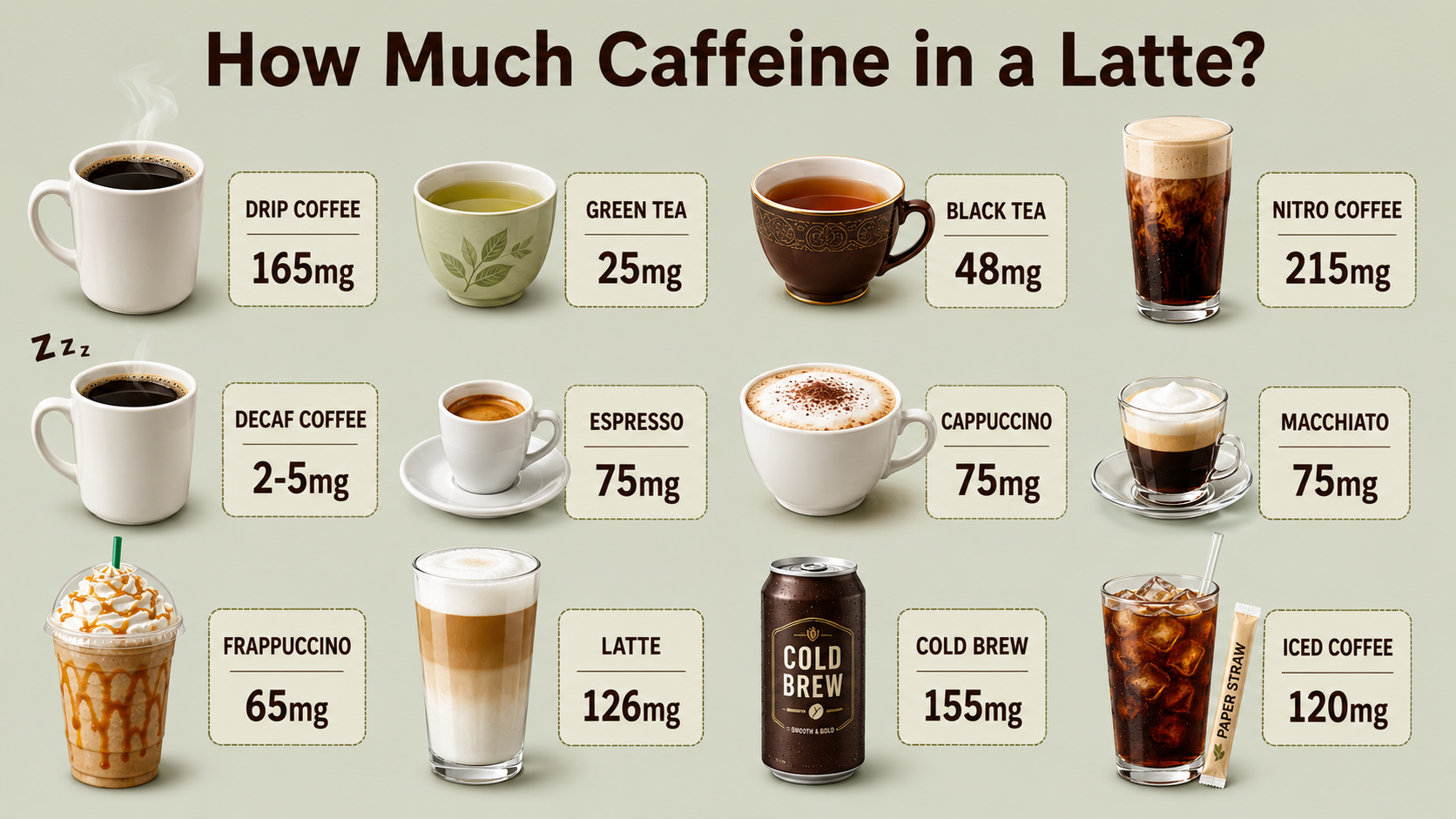
You grab a latte on your way to work. It smells amazing, tastes smooth, and gives you that little boost you need. But have you ever stopped to wonder exactly what you are drinking? Knowing how much caffeine in a latte can help you make smarter choices about your daily coffee habit. Let’s break it all down in a simple, honest way.
What Goes Into a Latte?
A latte is a simple drink. It is made with one or two shots of espresso and steamed milk. The milk is poured over the espresso, and a small layer of foam sits on top.
The espresso is what carries the caffeine. The milk adds creaminess but adds zero caffeine. So when you ask how much caffeine in a latte, you are really asking how much caffeine is in the espresso inside it.
The Role of Espresso Shots
A single shot of espresso holds about 63 milligrams of caffeine. A double shot, which many coffee shops use as their standard, holds around 125 to 130 milligrams. That number can shift a bit depending on the coffee beans and the brewing process.
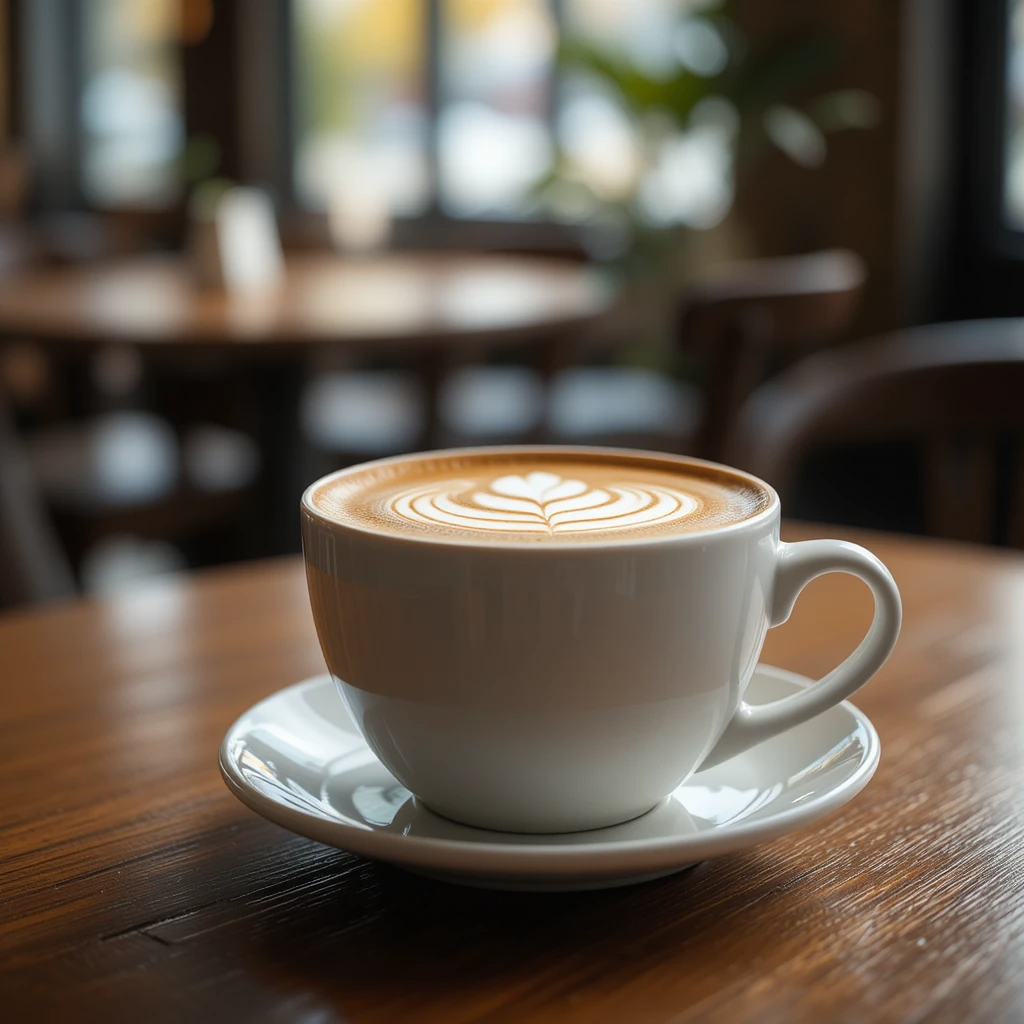
Most medium and large lattes at popular chains are made with two shots. That means the caffeine you get is usually in the 125 to 150 milligram range for a standard order.
How Much Caffeine in a Latte by Size?
This is where things get interesting. The size of your latte changes how many espresso shots go into it. More shots mean more caffeine.
Here is a simple breakdown of what you can expect:
| Latte Size | Espresso Shots | Approximate Caffeine |
|---|---|---|
| Small (8 oz) | 1 shot | 60–75 mg |
| Medium (12 oz) | 1–2 shots | 75–150 mg |
| Large (16 oz) | 2 shots | 120–150 mg |
| Extra Large (20 oz) | 2–3 shots | 150–225 mg |
| Starbucks Tall (12 oz) | 1 shot | ~75 mg |
| Starbucks Grande (16 oz) | 2 shots | ~150 mg |
| Starbucks Venti (20 oz) | 2 shots | ~150 mg |
| Dunkin’ Medium Latte | 2 shots | ~119 mg |
So how much caffeine in a latte really depends on the size you order and the coffee shop you visit. Always check with your barista if you want to be sure.
Does the Type of Milk Change the Caffeine?
Not at all. Whether you use whole milk, oat milk, almond milk, or soy milk, the caffeine level stays the same. Milk has no caffeine, no matter what type you choose.
What milk does affect is the taste, texture, and calorie count of your drink. But if caffeine is your main concern, focus on the espresso, not the milk.
Latte vs. Other Coffee Drinks: How Do They Compare?
It helps to see how a latte stacks up against other popular drinks. This gives you a clearer picture of where it sits on the caffeine scale.
| Coffee Drink | Serving Size | Caffeine |
|---|---|---|
| Latte (2 shots) | 16 oz | ~150 mg |
| Cappuccino (2 shots) | 6–8 oz | ~150 mg |
| Drip Coffee | 8 oz | 95–200 mg |
| Americano (2 shots) | 12 oz | ~150 mg |
| Macchiato (2 shots) | 4 oz | ~150 mg |
| Flat White (2 shots) | 5–6 oz | ~130 mg |
| Espresso (single shot) | 1 oz | ~63 mg |
| Decaf Latte | 16 oz | 2–15 mg |
You can see that a latte is not the strongest coffee drink, but it is not weak either. A standard drip coffee can actually carry more caffeine per ounce than a latte, mainly because it brews for longer.
How Much Caffeine in a Latte at Popular Coffee Chains?
You might be surprised to know that how much caffeine in a latte can vary quite a bit between chains. Each brand uses different beans and different brewing standards.
Starbucks Lattes
Starbucks is one of the most popular coffee shops in the world. A Starbucks Tall latte (12 oz) has around 75 mg of caffeine because it uses just one shot. A Grande (16 oz) has about 150 mg with two shots. Interestingly, a Venti (20 oz) also uses only two shots, so the caffeine stays close to 150 mg even though the cup is bigger.
Dunkin’ Lattes
Dunkin’ uses two shots of espresso for most of its latte sizes. A medium Dunkin’ latte gives you around 119 mg of caffeine. Their espresso tends to run a little lighter than Starbucks, which is why the number is slightly lower.
Independent Coffee Shops
Smaller coffee shops can vary widely. Some use specialty espresso blends with higher caffeine content. Others focus on lighter roasts, which can actually carry more caffeine than dark roasts. If you are watching your intake, it is worth asking the barista directly.
Does the Roast Level Affect Caffeine?
This is a common question. Many people assume dark roast coffee is stronger in caffeine. That is actually a myth.Light roast coffee beans hold slightly more caffeine by weight than dark roast beans. The roasting process breaks down caffeine a little, so darker roasts lose a bit more. In practice, the difference is small. But it is worth knowing if someone tells you that a bold dark roast always means more caffeine.
For a latte specifically, how much caffeine in a latte is shaped more by the number of shots than by the roast.
How Much Caffeine Is Too Much?
The FDA says that 400 milligrams of caffeine per day is safe for most healthy adults. That works out to about two to four lattes per day, depending on size.Going over 400 mg can lead to jitteriness, headaches, a racing heart, and trouble sleeping. Some people are more sensitive to caffeine than others. Pregnant women are often advised to keep intake under 200 mg per day.
If you feel anxious or cannot sleep after your afternoon latte, that is your body telling you to cut back. Everyone responds to caffeine a little differently, and it is always smart to listen to your own body.
What About Flavored Lattes and Syrups?
Adding vanilla syrup, caramel, or hazelnut to your latte does not change the caffeine level. Syrups are made from sugar and flavoring, not coffee.
However, some specialty drinks add extra shots of espresso or even a shot of caffeine-boosting add-ins. If you order a custom drink, it is a good idea to ask about the number of espresso shots included.
What About Matcha or Chai Lattes?
These drinks use the word “latte” but contain no espresso at all. A matcha latte uses green tea powder instead. A chai latte uses spiced black tea concentrate.

A matcha latte has about 40 to 70 mg of caffeine per serving. A chai latte has roughly 25 to 55 mg. Neither one compares to the amount found when you ask how much caffeine in a latte made with espresso.
Tips to Manage Your Caffeine Intake
Knowing how much caffeine in a latte is the first step. Managing that intake smartly is the next.Here are some practical things you can do:
Order fewer shots. Ask for one shot instead of two in your latte. You cut the caffeine almost in half while keeping the drink you love.
Switch to half-caf. Many coffee shops will blend regular and decaf espresso. This gives you a lighter caffeine hit without giving up flavor.
Try a later cutoff time. Caffeine stays in your system for up to six hours. If you want to sleep by 10 pm, stop drinking coffee by 2 or 3 pm.
Watch your total daily count. It is easy to lose track of how many drinks you have had. A morning latte plus an afternoon latte plus a soda can push you past the 400 mg limit before you realize it.
Why People Ask How Much Caffeine in a Latte
People want to know how much caffeine in a latte for all kinds of reasons. Some are managing anxiety. Others are trying to sleep better. Many are pregnant or breastfeeding. Some are just curious.
Whatever your reason, knowing the numbers puts you in control of your health. You do not have to give up your latte. You just need to understand what is in it and how it fits into your day.
Conclusion: Your Latte, Your Choice
So, to wrap it all up: how much caffeine in a latte depends mostly on the number of espresso shots, the type of bean, and where you buy it. A standard double-shot latte gives you about 126 mg of caffeine, which is well within the safe daily limit for most healthy adults.
Milk type, flavorings, and ice do not change the caffeine in any meaningful way. The shot count is what really matters. Whether you prefer Starbucks, Dunkin’, your local cafe, or a homemade brew, now you know exactly what you are drinking. Enjoy your latte with confidence. You have got the facts.
FAQs About How Much Caffeine in a Latte
Can I reduce the caffeine in my latte without changing the taste much?
Yes, you can. Ask your barista for a half-caf latte, which blends regular and decaf espresso in equal parts. You cut the caffeine roughly in half but keep the same smooth, creamy flavor you enjoy. Most coffee shops offer this option without any extra charge.
Does a hot latte have more caffeine than an iced latte?
Not really. The caffeine difference between a hot and iced latte comes down to the number of espresso shots, not the temperature. An iced latte sometimes uses slightly more ice and less milk, but the espresso amount stays the same. So your caffeine intake stays consistent either way.
How long does the caffeine from a latte stay in your body?
Caffeine has a half-life of about five to six hours. That means if you drink a latte with 150 mg of caffeine at noon, about 75 mg is still active in your system by 6 pm. This is why afternoon lattes can sometimes make it harder to fall asleep at night.
Is a latte a good choice if I am sensitive to caffeine?
A latte can actually work well for people with mild caffeine sensitivity. The large amount of milk slows down how quickly your body absorbs the caffeine. You get a gentler, more gradual energy boost compared to drinking straight espresso or a black coffee. Ordering a single-shot latte keeps the caffeine even lower, around 60 to 75 mg.
Do sugar-free or low-calorie lattes have less caffeine?
No, they do not. Removing sugar or switching to a sugar-free syrup does not affect the caffeine level at all. The caffeine lives entirely in the espresso, not in the sweeteners or flavorings added to the drink. A sugar-free vanilla latte has the same caffeine as a regular vanilla latte made with the same number of shots.