You wake up in the morning and face the same question: green tea or coffee? Both give you energy. Both taste great. But they work very differently inside your body. Understanding caffeine in green tea vs coffee helps you make a smarter choice for your health, your focus, and your daily routine. Let’s break it all down in a way that’s easy to understand.
How Much Caffeine Is Actually in Each Drink?
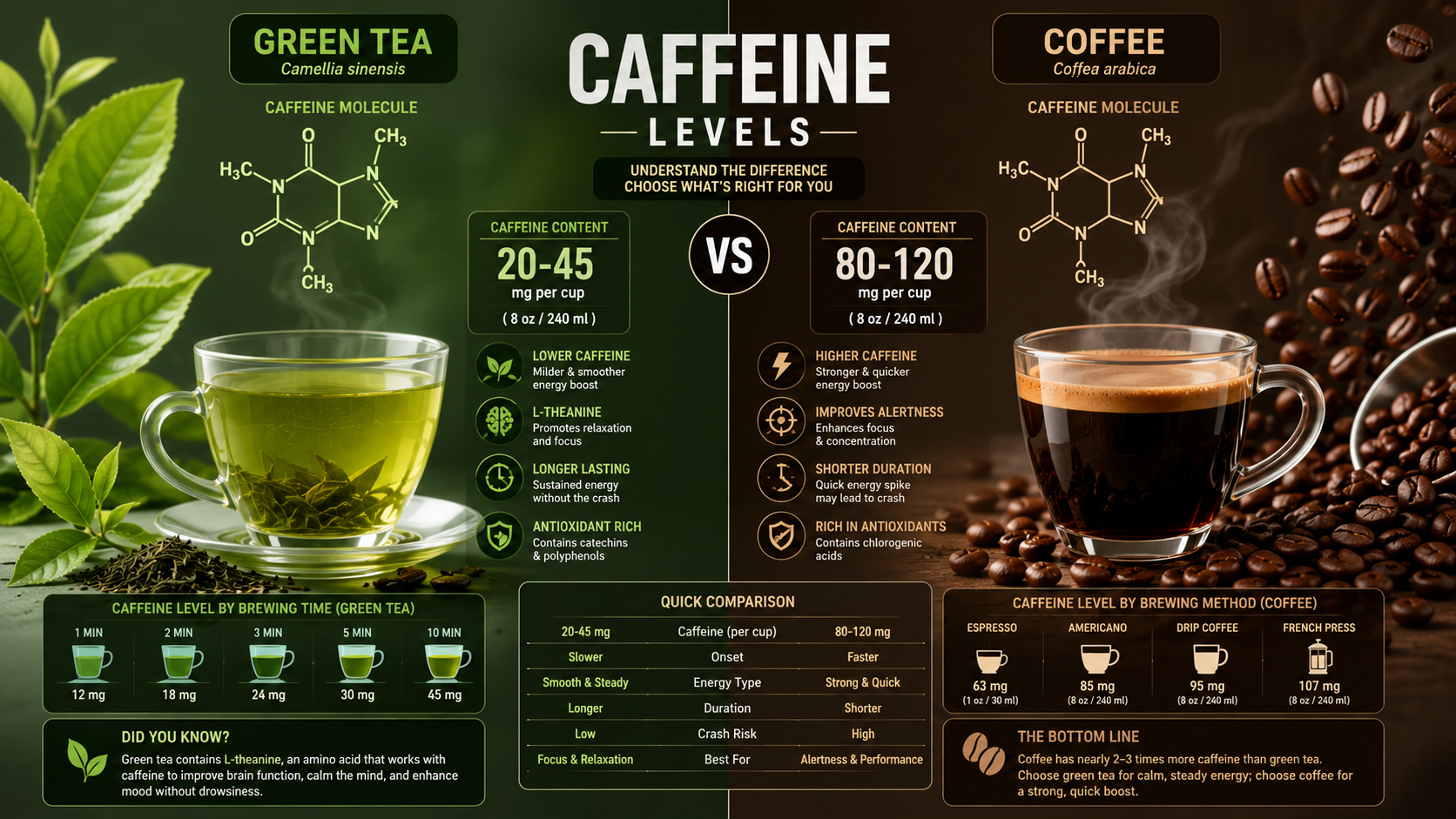
Before you pick your morning cup, it helps to know the numbers. The amount of caffeine in green tea vs coffee varies quite a bit. A standard 8-ounce cup of brewed coffee contains around 80 to 100 milligrams of caffeine. Green tea, on the other hand, contains only about 20 to 45 milligrams per cup.

That means coffee packs roughly two to four times more caffeine than green tea. So if you want a strong, fast energy kick, coffee wins. But more caffeine is not always better, and the type of energy each drink gives you is very different.
The Big Table: Caffeine in Green Tea vs Coffee at a Glance
Here is a quick comparison to help you see the key differences side by side.
| Feature | Green Tea | Coffee |
|---|---|---|
| Caffeine per 8 oz cup | 20 to 45 mg | 80 to 100 mg |
| Energy onset | Slow and steady | Fast and strong |
| Energy crash | Rare | Common |
| L-theanine present | Yes | No |
| Antioxidant content | Very high | High |
| Effect on sleep | Mild impact | Stronger impact |
| Best time to drink | Morning or afternoon | Morning |
| Jitteriness risk | Low | Higher |
| Heart rate increase | Slight | Noticeable |
| Suitable for sensitive people | Yes | Often no |
This table shows that the caffeine in green tea vs coffee debate is not just about quantity. It is also about how your body responds to each drink.
Why Green Tea Feels Different Even with Less Caffeine
Here is something interesting. Many people say green tea gives them calm, focused energy. Coffee sometimes gives them a jittery, anxious feeling. Why does that happen? The answer is L-theanine. Green tea contains a natural amino acid called L-theanine. This compound works alongside caffeine to smooth out the energy boost. It helps your brain relax without making you feel sleepy. That combination of caffeine and L-theanine is one reason why people feel more clear-headed after green tea compared to coffee.
What L-Theanine Actually Does
L-theanine increases alpha brain waves. These are the same brain waves active during meditation or deep focus. When you pair that with caffeine, you get energy that feels clean and steady. Think of it like driving a car with cruise control versus stomping on the gas pedal. Coffee is the gas pedal. Green tea is the cruise control.
Studies show that this combination improves attention, memory, and reaction time better than caffeine alone. So even though the caffeine in green tea vs coffee numbers favor coffee, the green tea experience can feel sharper for many people.
How Each Drink Affects Your Energy Levels
One of the most practical things to understand about caffeine in green tea vs coffee is the energy timeline. Coffee works fast. You usually feel the effects within 15 to 30 minutes. The energy peak hits hard, and then it drops. That afternoon slump is real for many coffee drinkers.
Green tea works more slowly. The energy builds gently over 30 to 60 minutes and stays more consistent. You are less likely to crash later in the day. For people who need steady focus for hours, that matters a lot.
Why Coffee Crashes Happen
When coffee sends a big surge of caffeine into your system, your body responds quickly. Your heart rate rises. Your adrenaline spikes. Your blood sugar may rise and then fall. All of that can lead to fatigue once the caffeine wears off. Green tea’s lower caffeine dose does not trigger the same dramatic response. Your body handles it more easily.
Antioxidants: Another Reason to Think About Your Cup
Both green tea and coffee contain antioxidants. These are compounds that protect your cells from damage. But they contain different types. Green tea is rich in catechins, especially a powerful one called EGCG (epigallocatechin gallate). Coffee contains chlorogenic acids.
Both are good for you. Research links regular green tea drinking to better heart health and lower cancer risk. Coffee has also shown benefits for liver health and reduced risk of type 2 diabetes. When people discuss caffeine in green tea vs coffee, they sometimes forget that the health story goes beyond just caffeine.
Which One Is Better for Focus and Productivity?
This depends on what kind of work you are doing. For fast-moving tasks that need quick bursts of energy, coffee may help. For long writing sessions, studying, or creative work that needs calm concentration, green tea often wins.
Many professionals and students report that switching to green tea in the afternoon helps them stay focused without disrupting their sleep. Coffee taken after 2 pm can interfere with sleep for many people because caffeine has a half-life of about five to six hours. That means half the caffeine from a 3 pm coffee is still in your system at 8 pm.
Tips for Using Each Drink Wisely
If you drink coffee, try to have it before noon. Pair it with food to avoid stomach discomfort. If you drink green tea, you can enjoy it later in the day without worrying too much about sleep. Matcha, a powdered form of green tea, contains more caffeine than regular green tea (about 70 mg per cup) and is a good middle ground between the two.
Who Should Choose Green Tea Over Coffee?
Some people respond very strongly to caffeine. They feel anxious, get heart palpitations, or cannot sleep after just one cup of coffee. For these people, green tea is a much better option. The lower caffeine level is easier to tolerate.

Pregnant women are generally advised to limit caffeine to 200 mg per day. A cup of green tea is about 30 mg, so it gives more room for flexibility compared to coffee. People with acid reflux may also prefer green tea since coffee is more acidic and can irritate the stomach lining.When comparing caffeine in green tea vs coffee for sensitive groups, green tea is clearly the gentler choice.
Who Might Prefer Coffee?
Athletes and people who do intense physical workouts often benefit from the higher caffeine in coffee. Caffeine improves physical performance by reducing the feeling of fatigue during exercise. Studies show it can improve endurance by up to 12 percent.
People who need to wake up quickly or stay alert during night shifts also tend to prefer coffee. The fast onset and strong effect make it practical in those situations. As long as you are not sensitive to caffeine, coffee can be a powerful tool when used at the right time.
The Sleep Factor: An Often Overlooked Part of the Debate
Sleep is where the comparison of caffeine in green tea vs coffee becomes very personal. Coffee disrupts sleep more easily because of its higher caffeine content. If you are someone who already struggles with sleep, coffee in the afternoon can make things worse.
Green tea has much less impact on sleep quality. Many people drink green tea in the early evening with no problems. However, you should still avoid drinking any caffeinated drink right before bed. Even the small amount in green tea can keep some sensitive people awake.
Comparing Costs and Convenience
Coffee and green tea are both affordable. A bag of quality loose-leaf green tea can cost around three to five dollars and make 20 to 25 cups. A bag of coffee beans costs more per cup on average. However, this can vary a lot depending on the brand and quality.
Both are easy to make at home. Green tea takes just two to three minutes to steep. Coffee requires a bit more equipment unless you use instant. For busy mornings, both are practical options.
What Happens If You Drink Both?
Some people enjoy both drinks at different times of day. They start with coffee in the morning for a strong wake-up and switch to green tea in the afternoon for calm focus. This strategy lets you enjoy the benefits of both while avoiding too much caffeine at once.
The key is to watch your total daily caffeine intake. Most health experts recommend staying under 400 mg per day for healthy adults. That is about four cups of coffee or eight to ten cups of green tea. Combining the two gives you flexibility without going over the limit.
Final Thoughts: Choosing What Works for You
Understanding the difference in caffeine in green tea vs coffee is more than a science lesson. It is a practical guide to feeling your best every day. Coffee gives you speed and power. Green tea gives you calm and clarity. Neither is wrong. They just serve different needs.
If you want fast, strong energy early in the day, coffee is your friend. If you want smooth, focused energy with fewer side effects, green tea fits better. And if you are sensitive to caffeine or trying to improve your sleep, green tea is clearly the smarter pick.The best cup is the one that works for your body, your schedule, and your goals. Now that you understand the real differences in caffeine in green tea vs coffee, you can make that choice with confidence.
Frequently Asked Questions About Caffeine in Green Tea vs Coffee
Is green tea better than coffee for people who feel anxious after caffeine?
Yes, green tea is a much better choice for people who feel anxious or jittery after drinking coffee. The caffeine in green tea vs coffee is significantly lower, and green tea also contains L-theanine, which calms the nervous system while keeping you alert. Most people find they can enjoy green tea without the racing heart or restless feeling that coffee sometimes causes.
Can I drink green tea at night without it affecting my sleep?
Green tea is far less likely to disrupt your sleep compared to coffee, thanks to its lower caffeine content. Most healthy adults can enjoy a cup of green tea in the early evening without any major sleep problems. That said, if you are very sensitive to caffeine, it is still a good idea to stop drinking green tea at least two to three hours before bedtime.
Does green tea give you the same energy boost as coffee?
Not exactly, but many people actually prefer the way green tea makes them feel. The caffeine in green tea vs coffee is lower, so the energy boost is gentler and more gradual. Instead of a sharp spike followed by a crash, green tea gives you steady, calm focus that lasts longer without the burnout feeling.
Which drink has more health benefits, green tea or coffee?
Both drinks offer real health benefits, just in different ways. Green tea is packed with catechins, especially EGCG, which supports heart health and may lower cancer risk. Coffee is linked to better liver health and reduced risk of type 2 diabetes. When you look at caffeine in green tea vs coffee from a health angle, both are good choices as long as you drink them in reasonable amounts.
How many cups of green tea equal one cup of coffee in terms of caffeine?
On average, it takes about three to four cups of green tea to match the caffeine in one standard cup of coffee. A typical cup of coffee has around 80 to 100 milligrams of caffeine, while a cup of green tea has roughly 20 to 45 milligrams. So if you are switching from coffee to green tea and want a similar caffeine level, you may need a couple of extra cups throughout the day.