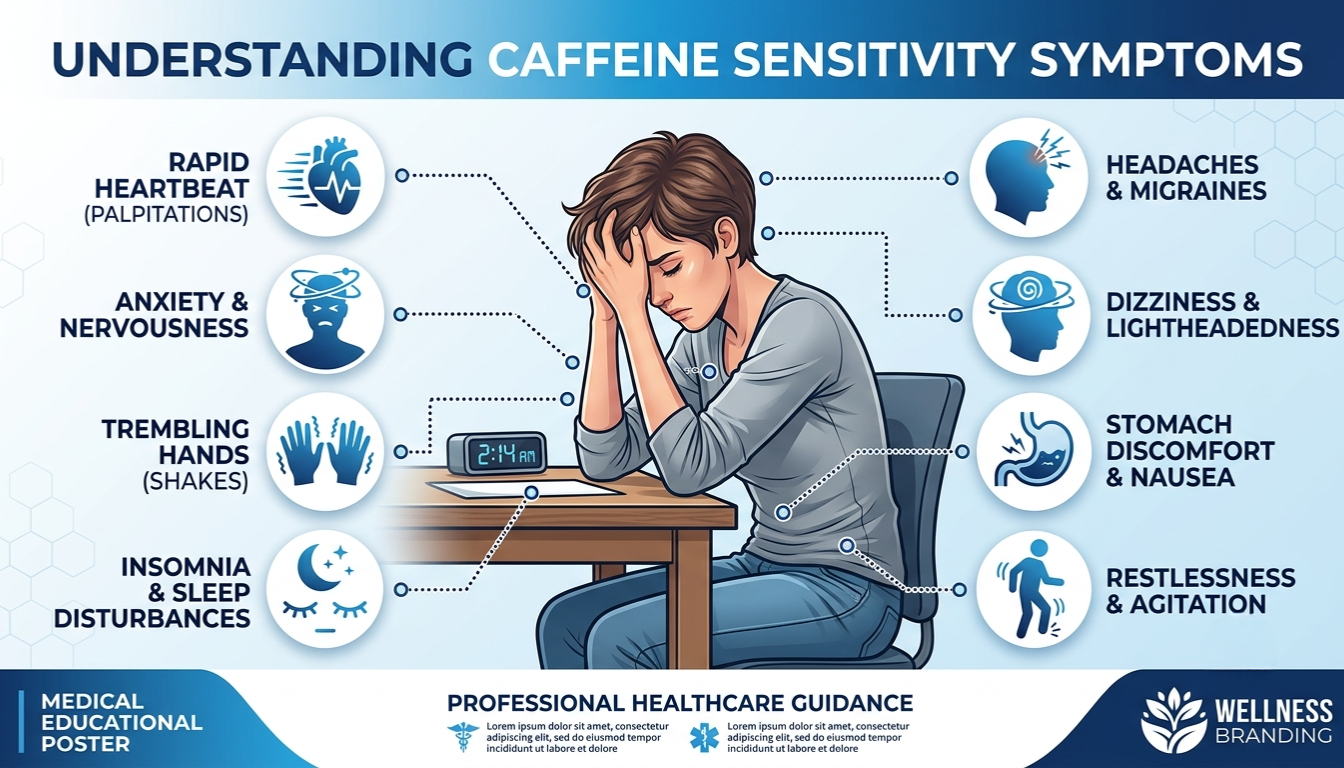
Do you feel anxious after just one cup of coffee? Does your heart race when you sip a soda? You might be dealing with caffeine sensitivity symptoms. Many people drink caffeine every day without thinking twice, but for some, even small amounts can cause real discomfort. Understanding what your body is going through can help you make smarter choices about what you drink.
What Is Caffeine Sensitivity and Why Does It Matter?
Caffeine sensitivity means your body reacts more strongly to caffeine than most people do. It is not the same as a caffeine allergy, though both can make you feel bad. When you have this sensitivity, your nervous system responds to caffeine in an intense way. This can happen even when you drink just a small amount.
Caffeine works by blocking adenosine, a chemical in your brain that makes you feel sleepy. When caffeine blocks adenosine, your brain stays alert. But in sensitive people, this process gets amplified, and the effects become much stronger than expected.
The Most Common Caffeine Sensitivity Symptoms You Should Know
Recognizing caffeine sensitivity symptoms early can save you a lot of discomfort. These symptoms often show up quickly, sometimes within 15 to 30 minutes of drinking caffeine. Knowing what to look for helps you take action before things get worse.

Feeling Anxious or Jittery After Caffeine
One of the most reported caffeine sensitivity symptoms is anxiety. You might feel shaky, restless, or on edge for no clear reason. Your thoughts may race, and you might find it hard to sit still. This happens because caffeine triggers your body’s “fight or flight” response.
Some people mistake this jittery feeling for excitement or stress. But if it happens every time you drink coffee or tea, caffeine sensitivity is likely the cause. Cutting back on caffeine often makes this feeling go away quickly.
A Racing or Pounding Heartbeat
Heart palpitations are another sign. You may notice your heart beating faster or harder than normal. This is one of the more alarming caffeine sensitivity symptoms, but it is usually harmless in healthy people. Still, it is a clear sign your body is not handling caffeine well.
If your heart races often after caffeine, it is worth talking to a doctor. While most palpitations from caffeine are benign, it is always smart to rule out other issues.
Trouble Sleeping Even Hours Later
Caffeine stays in your system longer than most people think. For someone with caffeine sensitivity, even an afternoon coffee can ruin a good night’s sleep. You might lie in bed for hours unable to turn off your thoughts or relax your body.
Poor sleep is one of the sneakiest caffeine sensitivity symptoms because it builds up over time. Day after day of bad sleep leads to fatigue, poor focus, and even mood problems. Many people do not connect their sleep troubles to that one cup they had at 3 PM.
Digestive Issues Like Nausea and Stomach Cramps
Caffeine speeds up your digestive system. For sensitive people, this can mean stomach cramps, loose stools, or nausea soon after drinking coffee. Some people also experience acid reflux because caffeine relaxes the valve between the stomach and esophagus.
If you always feel sick to your stomach after coffee, this is a classic example of caffeine sensitivity symptoms affecting your gut. Switching to lower-caffeine options or cutting back entirely often helps within a few days.
Headaches That Come and Go
This one might surprise you. Both too much caffeine and caffeine withdrawal can cause headaches. For sensitive people, even a moderate amount of caffeine can trigger a pounding head. The reason is that caffeine affects blood flow in the brain.
Headaches are tricky caffeine sensitivity symptoms to spot because they can seem unrelated to what you drank. Keeping a simple food and drink journal can help you connect the dots.
Quick Reference: Caffeine Sensitivity Symptoms at a Glance
| Symptom | How It Feels | When It Appears |
|---|---|---|
| Anxiety or jitteriness | Shaking, restlessness, racing thoughts | 15 to 45 minutes after caffeine |
| Heart palpitations | Fast or pounding heartbeat | 15 to 60 minutes after caffeine |
| Sleep problems | Lying awake, trouble falling asleep | Several hours after caffeine |
| Digestive issues | Nausea, cramps, acid reflux | 30 minutes to 2 hours after caffeine |
| Headaches | Throbbing or pressure in head | Within 1 to 2 hours of caffeine |
| Dizziness | Lightheaded or unsteady feeling | Within 30 to 60 minutes |
| Muscle tremors | Slight shaking in hands or legs | 30 to 90 minutes after caffeine |
| Irritability | Feeling easily annoyed or tense | 30 minutes to several hours after |
Who Is More Likely to Experience These Symptoms?
Some people are more prone to caffeine sensitivity symptoms than others. Genetics play a big role. The gene CYP1A2 controls how fast your liver breaks down caffeine. People with a slower version of this gene process caffeine more slowly, which means it stays in their system longer and causes stronger effects. Body weight, age, and overall health also matter. Smaller people tend to feel caffeine more intensely. Older adults often become more sensitive over time. People who rarely drink caffeine are also much more likely to feel its effects strongly when they do.
Certain medications can make sensitivity worse too. Some antidepressants, antibiotics, and heart medications interact with caffeine in ways that slow its breakdown. If you take daily medication and suddenly notice stronger reactions to caffeine, ask your doctor about possible interactions.
How Caffeine Sensitivity Differs From a Caffeine Allergy
People sometimes use these terms together, but they are not the same thing. A caffeine allergy involves your immune system. True allergic reactions to caffeine are rare, but they can include hives, swelling, and difficulty breathing. These need immediate medical attention.
Caffeine sensitivity symptoms, on the other hand, do not involve the immune system. They are more about how your nervous system and metabolism respond to the substance. They can be deeply uncomfortable, but they are usually not dangerous. Knowing the difference helps you decide whether to call a doctor or just cut back on coffee.
How Much Caffeine Is Too Much for a Sensitive Person?
Most health experts say that up to 400 milligrams of caffeine per day is safe for healthy adults. That is roughly four standard cups of coffee. But for someone with sensitivity, even 100 milligrams, which is about one small cup, can trigger symptoms.
A regular 8-ounce cup of coffee has about 80 to 100 milligrams of caffeine. Energy drinks can have anywhere from 80 to 300 milligrams per can. Even some teas and sodas contain enough caffeine to cause reactions in sensitive people. Reading labels can help you manage your intake more carefully.
Simple Ways to Manage Caffeine Sensitivity Symptoms
You do not have to give up caffeine completely, though that is certainly an option. Many people manage their caffeine sensitivity symptoms well by making a few smart adjustments to their habits.

Cut Back Gradually
Stopping caffeine all at once can cause withdrawal headaches and fatigue. A better approach is to reduce your intake slowly over one to two weeks. Try replacing one caffeinated drink per day with a decaf version or herbal tea.
Time Your Caffeine Wisely
Avoid caffeine after noon if you have trouble sleeping. Even if you feel fine right after drinking it, caffeine has a half-life of about five to six hours. That means half of what you drank at 2 PM is still in your system at 8 PM.
Try Lower-Caffeine Options
Switching from coffee to green tea or white tea gives you a gentler caffeine boost. Green tea also contains an amino acid called L-theanine, which many people find helps smooth out caffeine’s more jittery effects. Matcha is another popular option that some sensitive people tolerate better than coffee.
Stay Hydrated
Caffeine is a mild diuretic, meaning it makes you urinate more. Dehydration can make caffeine sensitivity symptoms feel worse. Drinking a glass of water alongside your coffee or tea can help offset this effect and keep you feeling steadier.
When Should You See a Doctor?
Most cases of caffeine sensitivity are manageable on your own. But there are times when you should seek professional advice. If your heart palpitations last more than a few minutes or feel very intense, see a doctor. If you experience chest pain, dizziness, or shortness of breath after caffeine, get checked out right away.
Persistent digestive problems are also worth discussing with a healthcare provider. Conditions like irritable bowel syndrome or gastroesophageal reflux disease can make caffeine sensitivity symptoms worse. A doctor can help you figure out whether caffeine is the main cause or just one part of a bigger picture.
A Final Word: Listen to Your Body
Your body gives you signals when something is not right. Caffeine sensitivity symptoms are one of those signals. They are your nervous system, digestive system, and heart telling you that a substance is affecting them more than it should. Paying attention to these signs is not weakness. It is smart self-care.
You can still enjoy a warm morning drink, socialize over coffee, or get a gentle energy lift. You just need to find the level and type of caffeine that works for your body. By understanding caffeine sensitivity symptoms, making small adjustments, and staying in tune with how you feel, you can keep doing the things you love without the unpleasant side effects. Your health is worth a few simple changes.
Frequently Asked Questions
Can caffeine sensitivity develop over time, or are you born with it?
Both are possible. Some people are born with a genetic makeup that makes them process caffeine slowly, which means they feel its effects more intensely from the start. Others develop sensitivity later in life due to changes in diet, age, medications, or stress levels. If you notice that coffee bothers you more than it used to, your body may simply be handling caffeine differently than it did before.
Is caffeine sensitivity permanent, or can it go away?
It depends on the cause. If genetics are the main reason, the sensitivity tends to stick around. But if lifestyle factors like poor sleep, high stress, or certain medications are making things worse, addressing those issues can reduce how strongly you react to caffeine. Some people find that taking a break from caffeine for a few weeks and then reintroducing it slowly helps them build up a better tolerance.
Does decaf coffee still cause problems for sensitive people?
It can. Decaf coffee is not completely caffeine-free. A standard cup of decaf contains roughly two to fifteen milligrams of caffeine, which is much less than regular coffee but still enough to affect highly sensitive people. If you react even to small amounts, switching to herbal teas that contain no caffeine at all is a safer choice.
Are children more sensitive to caffeine than adults?
Yes, generally speaking. Children have smaller bodies and less developed systems for processing stimulants, which means caffeine hits them harder and faster. Many pediatric health experts recommend that children avoid caffeine entirely. Teenagers often consume caffeine through energy drinks and sodas without realizing how much they are taking in, which can lead to anxiety, poor sleep, and concentration problems.
Can food trigger the same symptoms as caffeinated drinks?
Absolutely. Caffeine shows up in more foods than most people expect. Dark chocolate, some ice creams, certain protein bars, and even some medications contain caffeine. If you cut out coffee and tea but still feel jittery or restless, it is worth checking the labels on everything you eat. Tracking your food and symptoms for a week can help you spot hidden sources of caffeine you might be missing.