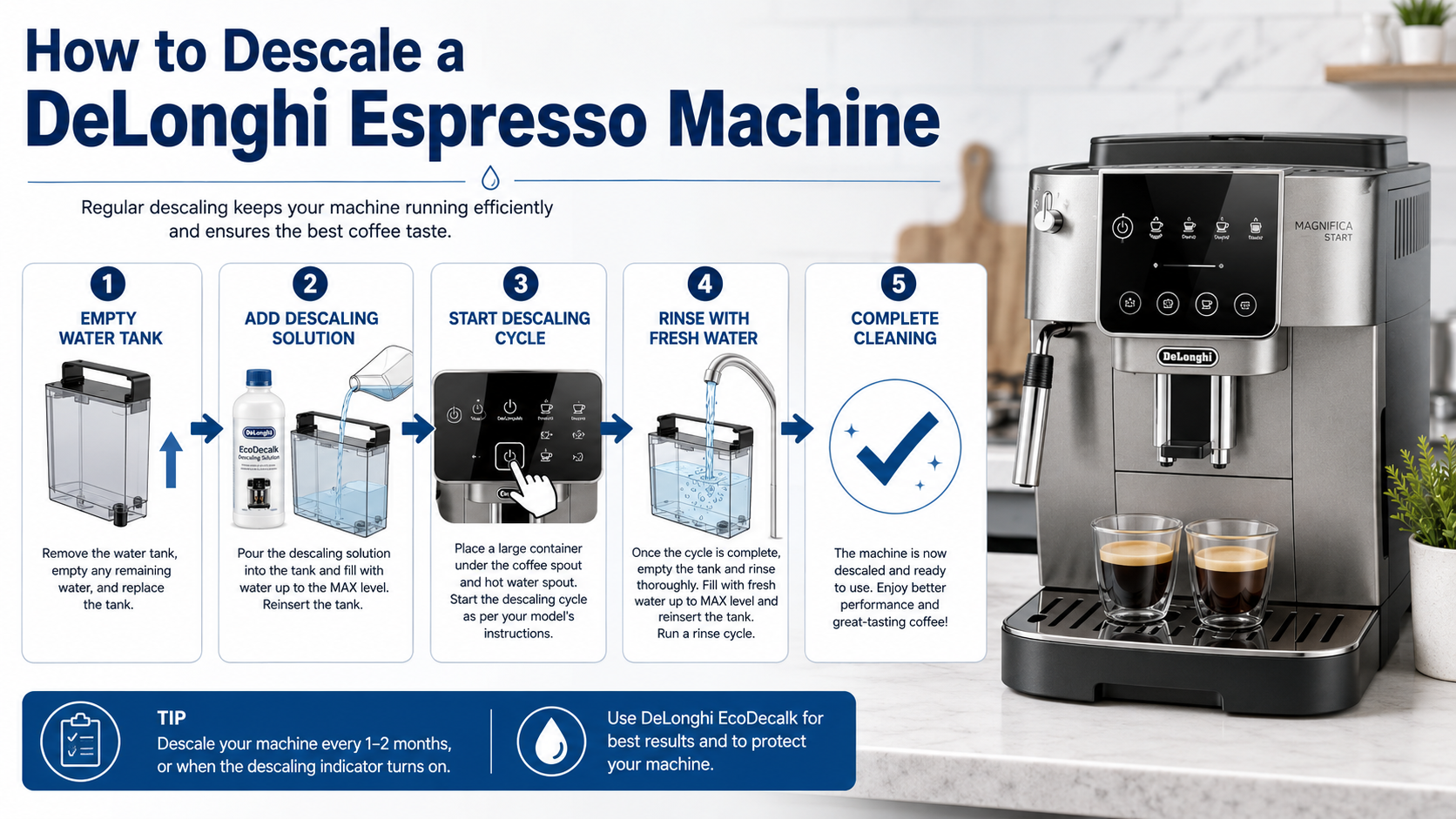
If your morning espresso tastes a little off lately, your machine might be telling you something. Scale buildup is one of the most common reasons espresso machines start to underperform. Learning how to descale DeLonghi espresso machine models the right way can bring your coffee right back to life. This guide walks you through everything simply and clearly.
Why Descaling Your DeLonghi Machine Actually Matters
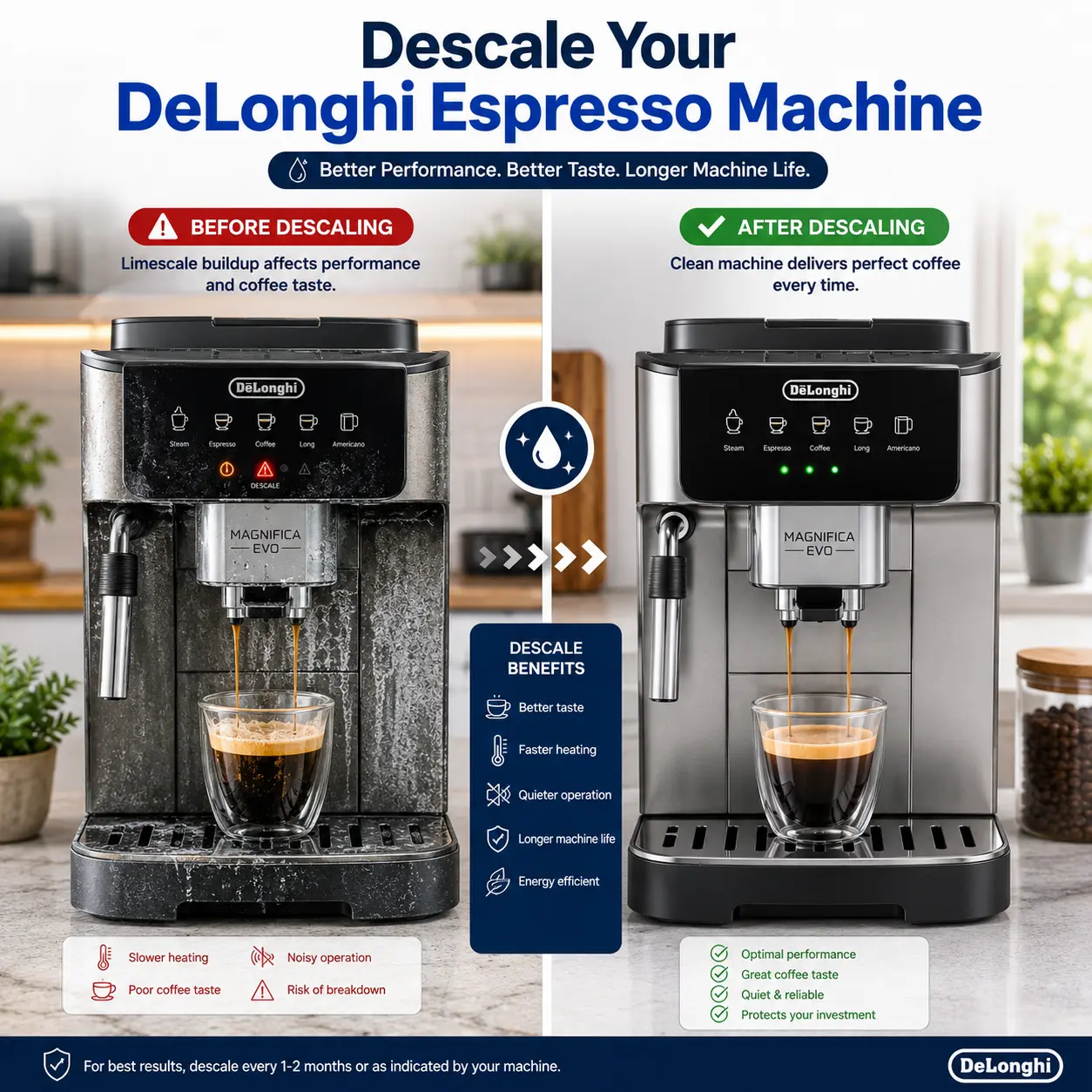
Scale is a white, chalky mineral deposit that forms inside your machine over time. It comes from the calcium and magnesium in tap water. Every cup of coffee you brew leaves a tiny bit of scale behind.Over time, that buildup blocks the water flow inside the machine. Your espresso comes out cooler, slower, and weaker. If you ignore it long enough, the machine can even break down completely.
Descaling keeps your machine working at full power. It also protects the heating element, which is one of the most expensive parts to replace. Think of descaling like changing the oil in your car. Skip it too long, and things get expensive fast.
How Often Should You Descale Your DeLonghi?
Most DeLonghi machines have a built-in descaling reminder light. When that light turns on, it is time to act. Do not wait another week or two.As a general rule, you should descale your machine every two to three months. If you live in an area with hard water, you may need to do it more often. Hard water has more minerals, which means scale builds up faster. Here is a quick guide to help you figure out your schedule:
| Water Type | Cups Per Day | Recommended Descaling Frequency |
|---|---|---|
| Soft water | 1-2 cups | Every 3 months |
| Soft water | 3+ cups | Every 2 months |
| Hard water | 1-2 cups | Every 6-8 weeks |
| Hard water | 3+ cups | Every 4-5 weeks |
| Very hard water | Any amount | Every 3-4 weeks |
You can check your water hardness using a simple test strip from a hardware store. DeLonghi machines also come with a water hardness test strip in the box.
What You Need Before You Start
Before you begin, gather everything you need so the process goes smoothly. You do not want to pause halfway through to search for supplies.
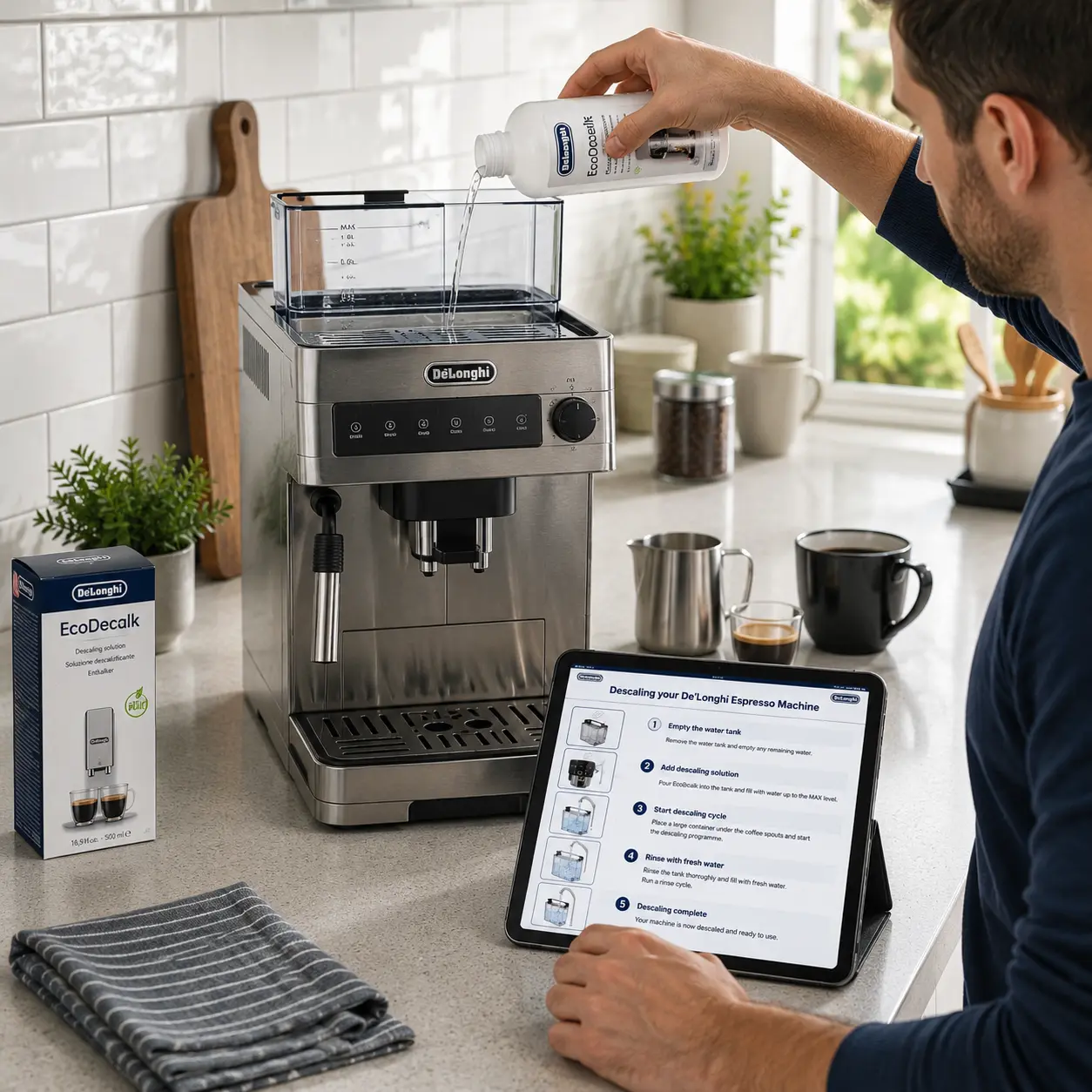
Here is what to have ready:
- DeLonghi descaler solution (EcoDecalk is the brand’s own product)
- A large container or jug (at least 1 liter capacity)
- Clean, fresh water
- A cloth or paper towel
- About 30 to 45 minutes of free time
Always use a descaler made for espresso machines. Vinegar is a popular home remedy, but it can damage the internal seals in DeLonghi machines. The brand recommends EcoDecalk, and using it also keeps your warranty valid.
How to Descale DeLonghi Espresso Machine: Step-by-Step
Now here is the part you came for. The exact process varies slightly depending on your model. However, the core steps for how to descale DeLonghi espresso machine are similar across most models.
Step 1: Empty and Prepare the Machine
Start by turning off the machine and letting it cool down. Remove the water tank and pour out any leftover water. Also take out the drip tray and empty it.Remove any capsules or coffee pods from the machine. You do not want any coffee brewing during the descaling cycle. Place the large jug or container under the steam wand and coffee spout to catch the liquid.
Step 2: Mix the Descaling Solution
Fill the water tank with one liter of fresh water. Add the recommended amount of EcoDecalk descaler. For most DeLonghi models, this is about 100ml of solution.Stir the mixture gently and place the tank back into the machine. The descaling liquid will flush through the entire water system inside.
Step 3: Activate Descaling Mode
This step is where models differ. On most DeLonghi machines, you enter descaling mode by pressing and holding specific buttons. Check your model’s manual for the exact combination.For example, on the Magnifica series, you hold the steam button and the coffee button at the same time for a few seconds. The descaling light will blink or turn solid to confirm you are in the right mode.
Once the machine enters descaling mode, it will start pumping the solution through automatically. Stay nearby and watch the process.
Step 4: Run the First Descaling Cycle
The machine will push the descaling solution through in stages. It will pause, heat up, push more liquid, and then pause again. This cycle usually takes about 20 to 30 minutes.Do not unplug the machine or interrupt the cycle. Let it finish completely. The solution breaks down scale inside the boiler, pipes, and pump as it moves through.
Step 5: Rinse with Fresh Water
Once the descaling cycle finishes, the machine will usually signal you to add fresh water. Empty the water tank completely. Rinse it with clean water to remove any leftover descaler residue.Fill the tank with fresh, clean water up to the maximum line. Place your jug back under the spouts. The machine will then run a rinse cycle to flush out any remaining descaler from the internal parts.
Step 6: Complete the Process and Reset
After the rinse cycle finishes, the machine will signal that it is done. On most models, the descaling light will turn off. That is your confirmation that the process worked.Wipe the outside of the machine with a damp cloth. Put the drip tray back in place. Your machine is now ready to brew great espresso again.
Common Mistakes People Make When Descaling
Even with a clear guide, people sometimes make simple errors. Knowing these ahead of time saves you trouble.
Using the wrong descaler: Generic descalers and vinegar can corrode the seals inside your DeLonghi. Always use EcoDecalk or a solution specifically approved for DeLonghi machines.
Skipping the rinse cycle: Some people stop after the descaling cycle thinking the job is done. The rinse cycle is just as important. Without it, traces of descaler can end up in your coffee.
Not checking the water tank during the cycle: If the tank runs dry mid-cycle, the pump can run without water and overheat. Stay nearby and top up if needed.
Ignoring the reminder light: The descaling light is not just a suggestion. Letting scale build up too long can permanently damage the heating element.
How to Descale DeLonghi Espresso Machine: Model-Specific Notes
DeLonghi makes many different espresso machines. The steps above cover the general process, but here are some quick notes for popular models.
DeLonghi Magnifica Series
This is one of the most popular DeLonghi lines. The descaling mode activates by holding the steam and hot water buttons simultaneously. The machine guides you through the process with light indicators on the panel.
DeLonghi Dedica
The Dedica is a slim, compact machine. Descaling mode on the Dedica starts by pressing the espresso and hot water buttons together while the machine is off. Hold them as you turn it on.
DeLonghi Dinamica and Dinamica Plus
These models have a touch display. You can access the descaling cycle directly through the settings menu on the screen. Follow the on-screen prompts from start to finish.
DeLonghi Eletta
The Eletta has an advanced display system. Navigate to the maintenance menu and select the descaling option. The machine will walk you through each step on the screen.
Signs That Your Machine Needs Descaling Right Now
Sometimes the reminder light comes on and you brush it off. Other times, the machine starts showing signs before the light even activates. Watch for these signals.Your espresso takes longer than usual to brew. The water comes out much hotter or much colder than normal. The machine makes loud or unusual noises during brewing. Your coffee tastes flat or slightly bitter even with fresh beans. The machine vibrates more than it used to.
Any one of these signs is a strong hint that scale is causing a problem. When you notice two or more together, descaling becomes urgent. Following the steps on how to descale DeLonghi espresso machine at this point can prevent a more serious repair.
Tips to Slow Down Scale Buildup Between Descaling Sessions
You cannot stop scale from forming entirely. But you can slow it down with a few easy habits.Use filtered water in your machine instead of straight tap water. A simple pitcher filter like Brita removes many of the minerals that cause scale. You can also buy a water filter that fits directly into some DeLonghi water tanks.
Empty and rinse the water tank daily. Do not let water sit in the tank for days at a time. Standing water can promote both scale and bacterial growth.If you go away for a week or more, empty the tank completely before you leave. Letting the machine dry out for a short time is much better than leaving stale water inside.
Is Descaling Safe to Do Yourself?
Absolutely. Descaling is one of the most basic forms of maintenance you can do at home. DeLonghi designs its machines specifically so that regular users can handle this task without any tools or special skills.The process is mostly automatic. Once you activate the descaling mode, the machine does the hard work for you. Your job is to add the solution, press the right buttons, and follow along.
If you are ever unsure, your machine’s manual has model-specific instructions. You can also find helpful resources on the DeLonghi support website. Do not let the task intimidate you. Millions of people do this at home every month.
Conclusion: Keep Your Machine Happy with Regular Descaling
Knowing how to descale DeLonghi espresso machine models properly is one of the most valuable things you can do as a coffee lover. It takes less than an hour, costs very little, and keeps your espresso tasting exactly the way it should.Scale is the silent enemy of espresso machines. It creeps in slowly and does its damage over months. But the good news is that it is completely preventable with a simple routine.
Set a reminder on your phone for every two to three months. Keep a bottle of EcoDecalk in your kitchen cabinet. The next time that descaling light comes on, you will know exactly what to do. Your machine will last longer, your coffee will taste better, and your mornings will stay stress-free.Great espresso starts with a clean machine. Take care of yours, and it will take care of you.
Faqs About How to Descale Delonghi Espresso Machine
Can I use any descaling solution for my DeLonghi machine?
Not all descalers work the same way. DeLonghi recommends using their own EcoDecalk solution because it is specially made for the materials inside their machines. Generic descalers or vinegar can wear down rubber seals and internal parts over time. Sticking with the right product protects your machine and keeps your warranty valid.
What should I do if the descaling light comes back on too quickly?
This usually means your water is very hard. Try switching to filtered water, which has fewer minerals and causes less scale buildup. You can also check your water hardness with a simple test strip. If the light keeps coming on faster than expected, consider descaling more frequently than the standard two to three month schedule.
Is it safe to drink coffee right after the descaling cycle finishes?
Yes, it is completely safe once the rinse cycle is done. The rinse cycle flushes out any leftover descaler from the internal parts. To be extra careful, you can run one short brew cycle with just water before making your first cup of coffee. This gives you peace of mind and ensures everything tastes clean and fresh.
Why does my espresso still taste strange even after descaling?
Descaling fixes mineral buildup, but it does not clean coffee oil residue. Coffee oils can build up in the brew group and portafilter over time and make your espresso taste bitter or stale. Try cleaning those parts with a dedicated espresso machine cleaner or rinsing them thoroughly with warm water. Regular cleaning alongside descaling keeps the flavor sharp.
Can I pause the descaling cycle if I need to stop?
It is best not to interrupt the cycle once it starts. Stopping midway can leave descaling solution sitting inside the machine, which may affect the taste of your next brew. If an emergency forces you to stop, restart the cycle from the beginning as soon as you can. Always make sure you have enough free time set aside before you begin the process.