If you start your morning with a quick cup of instant coffee, you have probably wondered how much caffeine in instant coffee you are actually getting. It is a fair question. Caffeine affects your energy, sleep, and focus, so knowing the numbers helps you make smarter choices throughout the day. Let us break it all down in a simple, clear way.
What Makes Instant Coffee Different from Regular Coffee?
Instant coffee goes through a special drying process. Manufacturers brew real coffee, then remove the water to create dry granules or powder. You just add hot water and stir.
Because of this process, instant coffee often has a slightly different caffeine level than drip or espresso coffee. It is still real coffee, just in a more convenient form.
How Much Caffeine Is in a Cup of Instant Coffee?
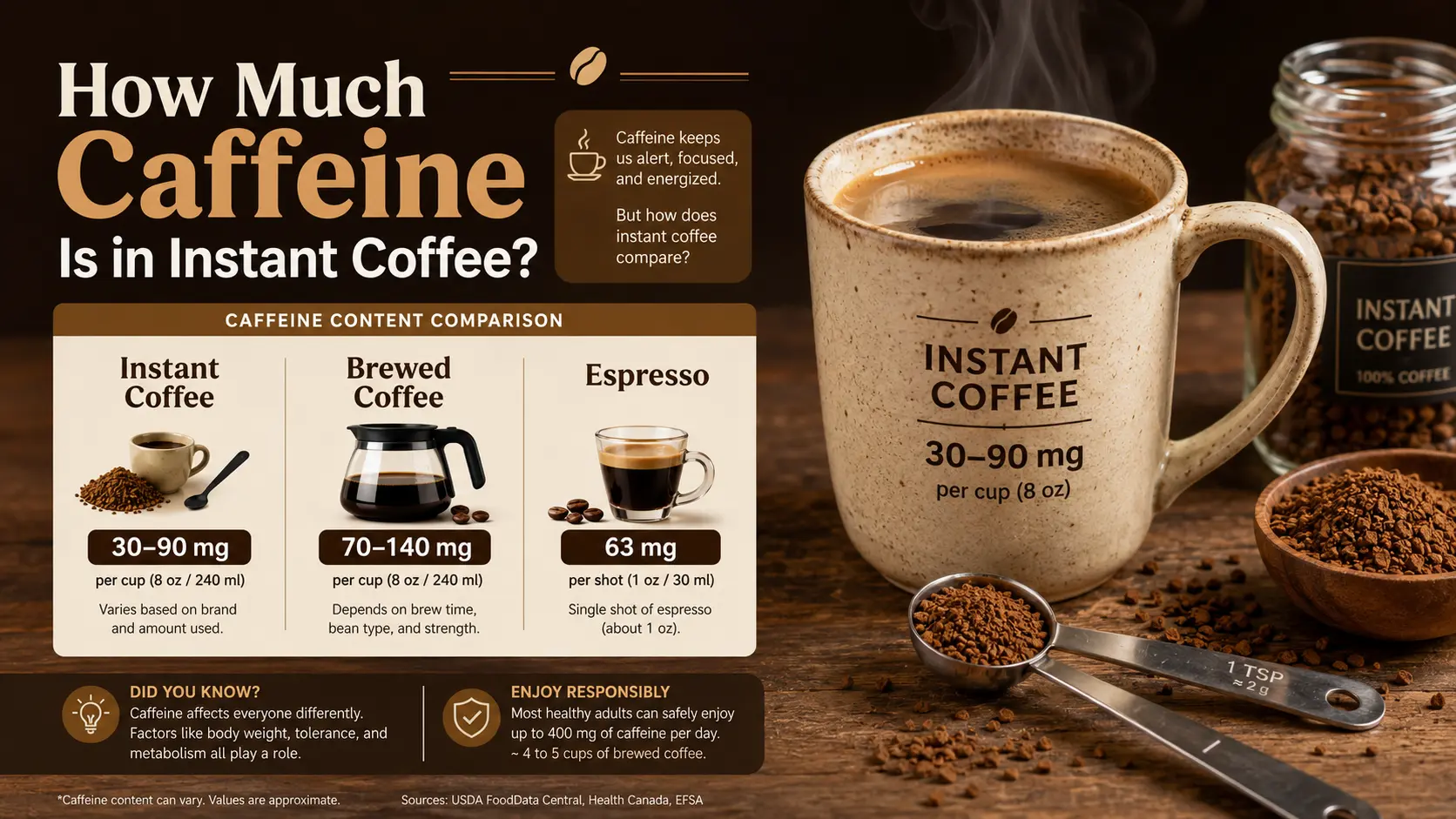
So, how much caffeine in instant coffee per serving? On average, one teaspoon of instant coffee contains about 60 to 80 milligrams of caffeine. A standard 8-ounce cup usually lands somewhere between 60 and 100 mg.
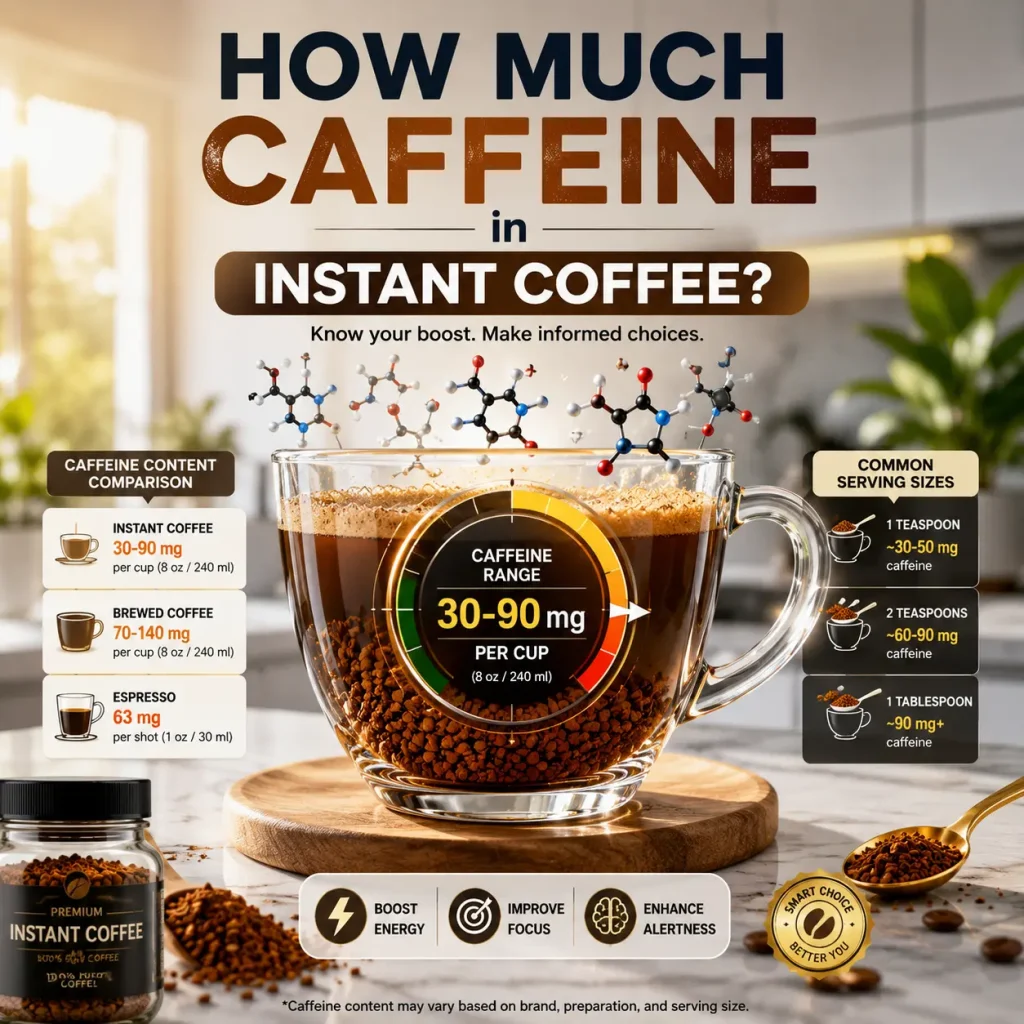
That number can shift depending on the brand, how much powder you use, and the type of coffee beans used. Some brands run lower, some higher. Always check the label if you want to be sure.
Caffeine Content by Brand: A Quick Comparison
Here is a helpful table showing how much caffeine in instant coffee varies across popular brands. These are approximate values for one standard serving.
| Brand | Serving Size | Caffeine (mg) |
|---|---|---|
| Nescafe Classic | 1 tsp (2g) | ~65 mg |
| Folgers Instant | 1 tsp (2g) | ~74 mg |
| Maxwell House Instant | 1 tsp (2g) | ~70 mg |
| Starbucks VIA | 1 packet (3.3g) | ~130 mg |
| Mount Hagen Organic | 1 tsp (2g) | ~60 mg |
| Waka Coffee | 1 tsp (2g) | ~70 mg |
| Death Wish Instant | 1 tsp (2g) | ~300 mg |
| Cusa Tea & Coffee | 1 packet (2g) | ~80 mg |
As you can see, the difference between brands can be huge. Death Wish Instant, for example, packs nearly five times the caffeine of a standard cup. If you are sensitive to caffeine, that matters a lot.
How Does Instant Coffee Compare to Other Coffee Types?
Understanding how much caffeine in instant coffee becomes more useful when you compare it to other popular drinks. Here is where it stands.
Instant Coffee vs. Drip Coffee
Drip coffee typically contains 95 to 165 mg of caffeine per 8-ounce cup. That is higher than most instant coffees. So if you switch from drip to instant, you might notice a slight difference in your energy level.
Instant Coffee vs. Espresso
A single shot of espresso (about 1 ounce) has roughly 63 mg of caffeine. That sounds low, but it is very concentrated. A double shot brings you to around 125 mg in a much smaller volume.
Instant Coffee vs. Cold Brew
Cold brew can have 150 to 240 mg of caffeine per serving, depending on the brewing method and dilution. It is one of the strongest options available.
Instant Coffee vs. Decaf
Decaf instant coffee still has some caffeine, usually around 2 to 15 mg per cup. It is not completely caffeine-free, which surprises many people.
What Factors Affect Caffeine Levels in Instant Coffee?
Several things change how much caffeine ends up in your cup. Knowing these helps you control your intake better.
The Type of Coffee Beans
Robusta beans naturally have about twice the caffeine of Arabica beans. Many budget instant coffees use Robusta because it is cheaper and stronger. Premium brands often use Arabica, which gives a smoother taste with slightly less caffeine.
How Much Powder You Use
This one is simple. More powder equals more caffeine. If you use two teaspoons instead of one, you roughly double your caffeine intake. Stick to the recommended serving if you want predictable results.
The Brand’s Specific Formula
Every brand has its own roast level, blend ratio, and manufacturing process. These details all affect caffeine content. That is why you should always check the packaging of your specific brand.
Water Temperature and Volume
Hot water helps extract caffeine fully from the powder. Using very cold or lukewarm water might slightly reduce extraction, though the difference is minor with instant coffee since the granules already dissolve easily.
How Much Caffeine Is Too Much?
The FDA recommends that healthy adults consume no more than 400 mg of caffeine per day. That equals about four to five standard cups of instant coffee. Pregnant women should stay below 200 mg per day.
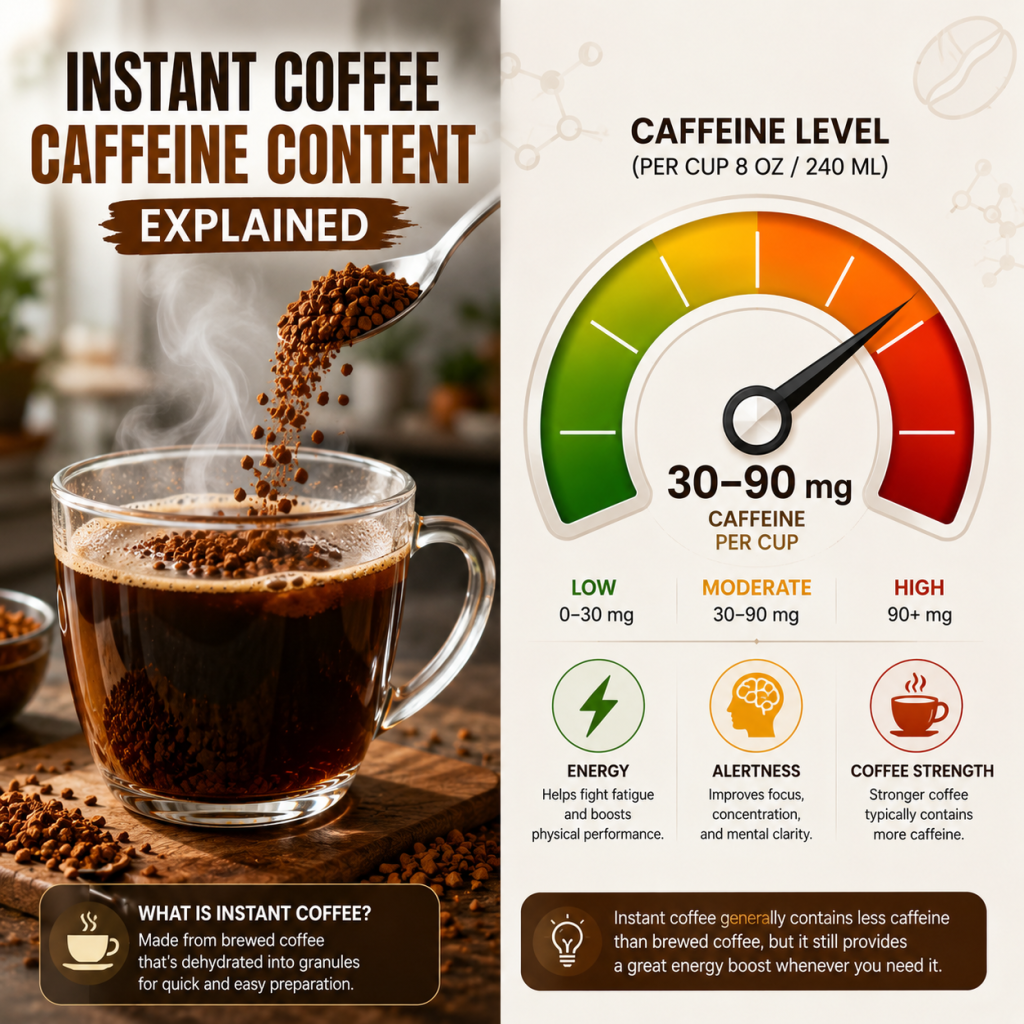
Going over 400 mg regularly can cause anxiety, poor sleep, a rapid heartbeat, and digestive issues. Everyone reacts differently, so pay attention to how your body feels.
Who Should Watch Their Instant Coffee Intake?
Some people need to be more careful with caffeine than others.
- Pregnant women should limit daily caffeine to 200 mg or less
- People with anxiety disorders may feel worse with higher caffeine levels
- Those with heart conditions should check with their doctor about safe limits
- Children and teenagers are more sensitive to caffeine and should avoid high amounts
- People who have trouble sleeping should avoid coffee after noon or early afternoon
If you fall into one of these groups, knowing how much caffeine in instant coffee you consume becomes even more important.
Is Instant Coffee a Good Choice for Caffeine?
It depends on what you need. If you want a quick, affordable caffeine boost with less fuss, instant coffee is a solid option. It is lighter than drip coffee but still gives you a noticeable lift.
Many people use instant coffee as a travel companion or backup option. It is easy to pack, requires no equipment, and dissolves in seconds. For everyday use, it works well for moderate caffeine needs.
Tips to Manage Your Caffeine Intake from Instant Coffee
Here are some practical ways to stay in control of how much caffeine you get from instant coffee each day.
1. Measure your powder. Use a measuring spoon rather than guessing. This keeps your caffeine consistent cup to cup.
2. Read the label. Most quality brands list caffeine content per serving. Use that number to track your daily total.
3. Watch your timing. Caffeine has a half-life of about five to six hours. Drinking coffee at 3 PM means half of it is still in your system at 8 or 9 PM.
4. Try half-caf options. Some brands sell instant coffee blended with decaf. This cuts your caffeine roughly in half with no taste sacrifice.
5. Hydrate alongside coffee. Caffeine is mildly diuretic. Drinking water throughout the day helps balance that effect.
Final Thoughts
Understanding how much caffeine in instant coffee you drink every day is a smart habit. A typical cup gives you around 60 to 100 mg, which is enough for a solid energy boost without going overboard. But brands vary widely, so always check the label.
Whether you are watching your caffeine for health reasons or just trying to optimize your daily routine, instant coffee can fit well into a balanced lifestyle. Use the table in this article to compare brands, measure your servings, and listen to your body.Now you have the full picture. Pour that cup with confidence and enjoy every sip.
FAQs About How Much Caffeine in Instant Coffee
Can I drink instant coffee on an empty stomach?
You can, but it is not ideal for everyone. Drinking instant coffee without food can cause stomach irritation or mild nausea in some people. If you notice discomfort, try having a small snack alongside your cup.
Does mixing instant coffee with milk reduce caffeine?
No, adding milk does not lower the caffeine content. The caffeine stays the same regardless of what you mix in. Milk only changes the taste, texture, and calorie count of your drink.
How much caffeine in instant coffee compared to energy drinks?
A standard energy drink contains around 80 to 150 mg of caffeine per can. A typical cup of instant coffee has about 60 to 100 mg. So they are fairly close, but many energy drinks also add sugar and other stimulants that coffee does not have.
Does instant coffee expire and lose caffeine over time?
Instant coffee does expire, but caffeine itself is very stable. An old jar may taste stale or flat, but the caffeine level stays mostly intact. Store your instant coffee in a cool, dry, airtight container to keep it fresh longer.
Is there a way to make instant coffee stronger without adding more powder?
Not really. The caffeine comes directly from the powder, so more powder is the main way to increase strength. However, using less water gives you a smaller, more concentrated cup that feels stronger, even if the total caffeine stays the same.