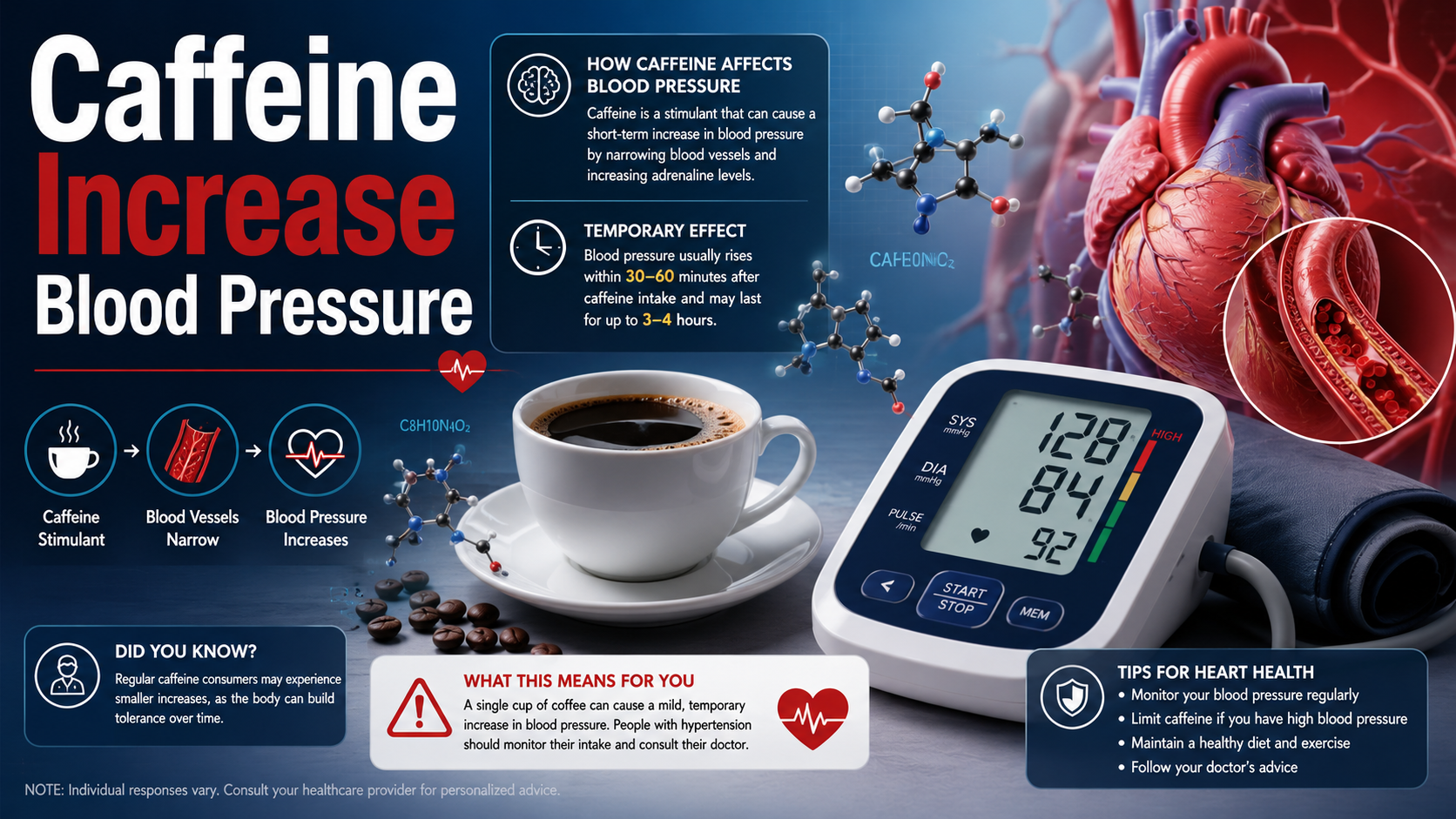
You just finished your morning coffee and suddenly feel your heart beating a little faster. Sound familiar? Many people wonder: does caffeine increase blood pressure, or is that just a myth? The answer is more interesting than you might think. Let’s break it all down in plain language so you can make smarter choices every day.
How Caffeine Actually Works Inside Your Body
Caffeine is a natural stimulant. You find it in coffee, tea, energy drinks, chocolate, and even some medicines. When you drink caffeine, it enters your bloodstream quickly, usually within 15 to 45 minutes.Once inside your body, caffeine blocks a chemical called adenosine. Adenosine normally helps you feel sleepy and keeps your blood vessels relaxed. When caffeine blocks it, your vessels tighten slightly, and your heart speeds up. That is why your morning cup makes you feel more alert.
This tightening of blood vessels is the main reason so many people ask: does caffeine increase blood pressure? And yes, it does, at least temporarily.
The Short-Term Spike: What Studies Actually Show
Researchers have studied this question for decades. The evidence is clear. Does caffeine increase blood pressure in the short term? Yes, it does, and the rise can be noticeable.
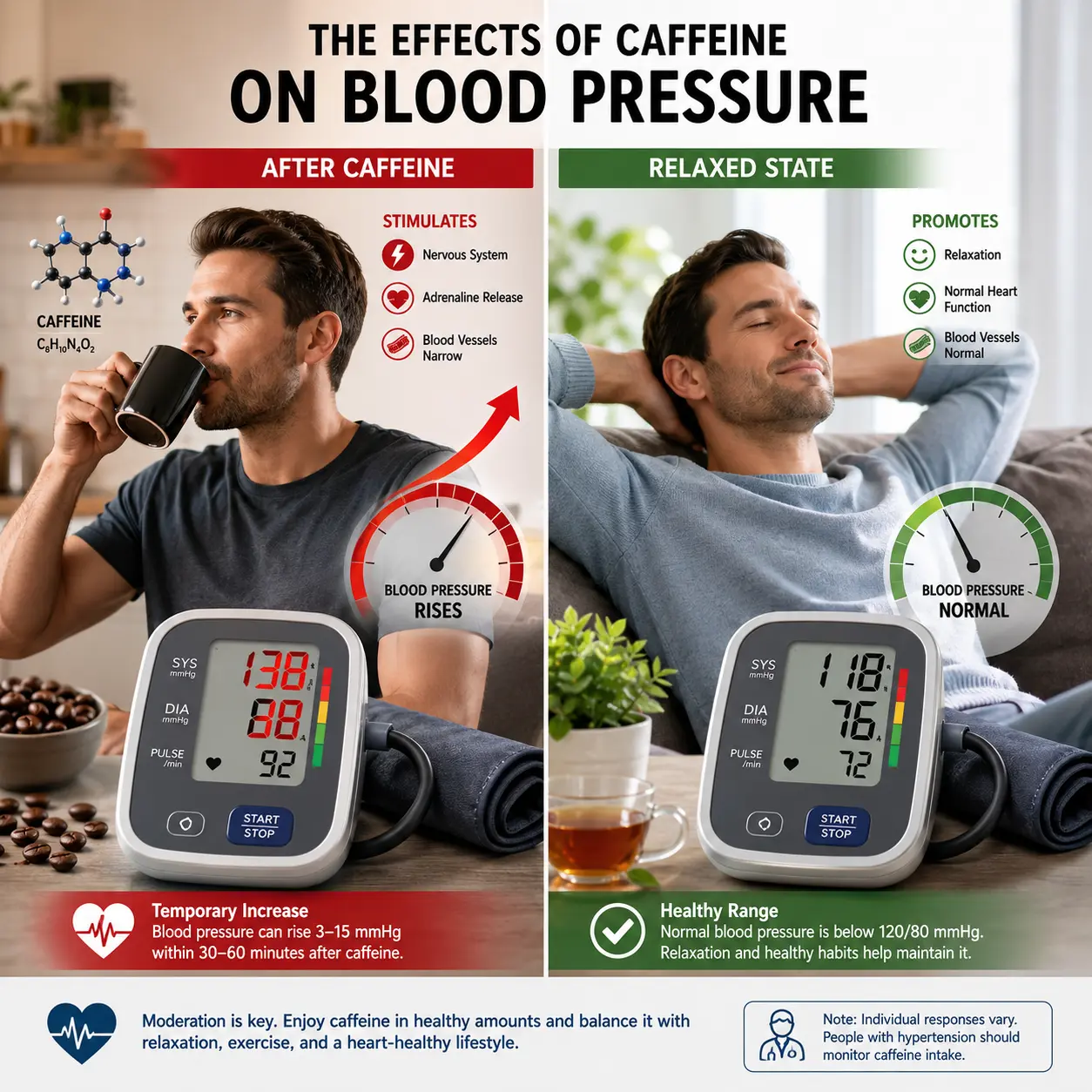
Most studies show that caffeine can raise systolic pressure (the top number) by 3 to 15 mmHg and diastolic pressure (the bottom number) by 4 to 13 mmHg. This spike usually happens within 30 minutes of drinking caffeine and can last 3 to 4 hours. Here is a simple comparison table showing what typically happens after caffeine intake:
| Time After Caffeine | Systolic Change | Diastolic Change | Effect Level |
|---|---|---|---|
| 15-30 minutes | +3 to +8 mmHg | +4 to +6 mmHg | Mild to moderate |
| 30-60 minutes | +8 to +15 mmHg | +6 to +13 mmHg | Peak effect |
| 1-3 hours | +5 to +10 mmHg | +3 to +8 mmHg | Gradually fading |
| 3-4 hours | +1 to +3 mmHg | +1 to +2 mmHg | Near baseline |
| 4+ hours | 0 mmHg | 0 mmHg | Back to normal |
These numbers matter, especially if your blood pressure is already on the higher side.
Does Caffeine Increase Blood Pressure in Everyone the Same Way?
Here is where it gets personal. Not everyone reacts the same way. Your genetics play a big role. Some people are “fast metabolizers.” Their bodies break down caffeine quickly, so the pressure spike is smaller and shorter. Others are “slow metabolizers.” Their caffeine lingers longer, and the blood pressure rise can be stronger and last longer.
If you are new to caffeine, your body has no tolerance yet. So does caffeine increase blood pressure more for beginners? Absolutely. First-time or irregular users can see much bigger spikes than regular coffee drinkers. Over time, regular drinkers build tolerance, and the pressure effect becomes smaller.
Regular Coffee Drinkers: Does the Risk Become Smaller?
Good news for daily coffee lovers. Your body adapts. Regular caffeine users often show little to no long-term rise in blood pressure because the body adjusts. This is called tolerance.
A large review published in the journal BMJ found that habitual coffee drinkers did not have significantly higher blood pressure than non-drinkers. The temporary spike from each cup becomes smaller over time as your system gets used to it.
That said, does caffeine increase blood pressure enough to cause concern even in regular drinkers? It can, especially if you drink large amounts or if you have other risk factors like stress, a salty diet, or a family history of hypertension.
What If You Already Have High Blood Pressure?
This is where the question gets more serious. If you already have hypertension (high blood pressure), you should pay extra attention here.
The Risk Is Real for Hypertensive Individuals
For people with high blood pressure, even a small temporary spike can push readings into a dangerous zone. Does caffeine increase blood pressure enough to cause a health event in these individuals? In some cases, yes.One study found that people with hypertension who were not regular coffee drinkers had a nearly threefold higher risk of a cardiovascular event in the three hours after drinking coffee compared to non-drinkers. That is a serious finding.
If you have high blood pressure, your doctor may recommend limiting caffeine. A safe general limit is often around 200 mg per day, which equals about one to two cups of regular coffee.
Medications Can Interact With Caffeine Too
Some blood pressure medicines may not work as well if you drink a lot of caffeine. For example, beta-blockers and certain calcium channel blockers can have reduced effects when caffeine is in the picture. Always talk to your doctor about your coffee habits if you take blood pressure medication.
Caffeine Sources Are Not All the Same
When people ask does caffeine increase blood pressure, they often picture a cup of coffee. But caffeine shows up in many places, and the amounts vary widely.
Common Caffeine Sources and Their Amounts
- Espresso (1 shot): 63 mg
- Drip coffee (8 oz): 95-165 mg
- Black tea (8 oz): 40-70 mg
- Green tea (8 oz): 20-45 mg
- Cola soda (12 oz): 35-45 mg
- Energy drink (16 oz): 150-300 mg
- Dark chocolate (1 oz): 12-25 mg
Energy drinks deserve special attention. They often combine caffeine with other stimulants like taurine or guarana, which can amplify the pressure effect. Does caffeine increase blood pressure more when combined with these other ingredients? Research suggests it might.
Timing Matters More Than Most People Think
When you drink caffeine can affect how much it impacts your blood pressure. Your body naturally has higher blood pressure in the morning when you wake up. Drinking coffee right after waking up can stack your natural morning surge with caffeine’s effect. Some health experts suggest waiting 90 minutes after waking up before drinking your first cup. This lets your cortisol (morning stress hormone) levels drop naturally first. Your caffeine then adds less of an extra spike on top.
This does not mean you need to ditch your morning coffee. But if you already have borderline high blood pressure, timing your first cup smarter can help keep your numbers in a better range.
What About Decaf Coffee? Is It Truly Safe?
Many people switch to decaf, thinking the question of does caffeine increase blood pressure no longer applies. Not entirely true. Decaf coffee still contains a small amount of caffeine, usually 2 to 15 mg per cup.For most people, this small amount is harmless. But for very sensitive individuals or people with extreme hypertension, even decaf might cause a tiny blip. Coffee also contains other compounds like chlorogenic acid that may affect blood vessels slightly.
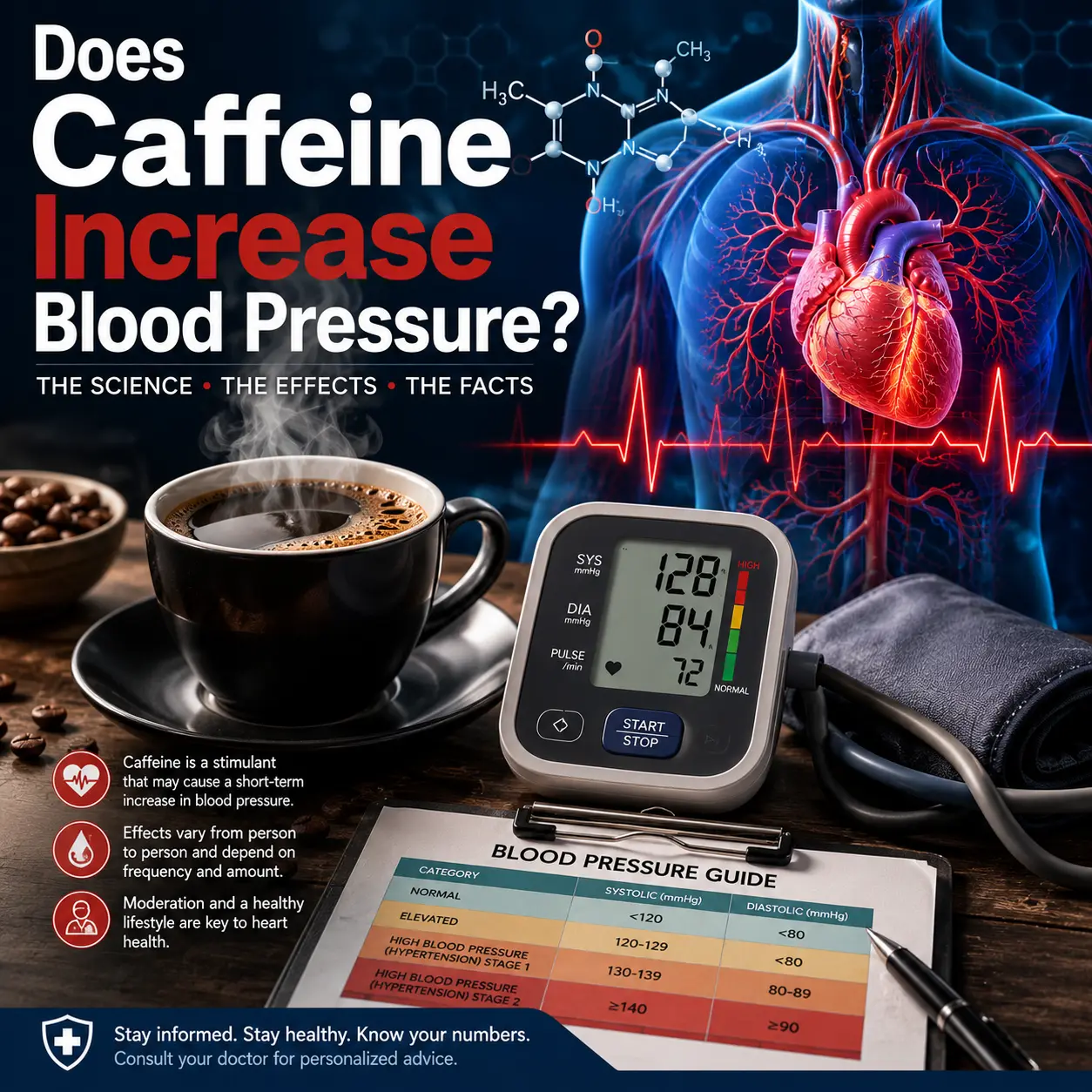
The good news is that most research shows decaf coffee does not raise blood pressure significantly. If your doctor tells you to limit caffeine, switching to decaf is usually a safe and smart move.
Practical Tips to Manage Caffeine and Blood Pressure
You do not have to live in fear of your morning cup. Here are some simple, real-world ways to enjoy caffeine while keeping your blood pressure in check.
Smart Habits That Actually Help
Track your intake. Most adults can safely consume up to 400 mg of caffeine per day. That is about three to four regular cups of coffee. Knowing how much you drink helps you stay in a healthy range.
Stay hydrated. Caffeine is mildly diuretic, meaning it makes you urinate more. Mild dehydration can raise blood pressure slightly. Drink water throughout the day alongside your coffee.
Avoid caffeine when stressed. Stress already raises blood pressure. Combining stress hormones with caffeine creates a stronger spike. If you are in a tense meeting or a stressful moment, maybe skip that extra cup.
Monitor your own readings. Home blood pressure monitors are affordable and easy to use. Take your pressure before and after a cup of coffee over a few days. Your own data is the most useful tool you have.
Eat before you drink caffeine. Drinking coffee on an empty stomach makes absorption faster and can make the pressure spike sharper. A small snack alongside your coffee can smooth out the effect.
Does Caffeine Increase Blood Pressure Long-Term? The Bigger Picture
After all this, the key long-term question remains: does caffeine increase blood pressure as a permanent condition if you drink it every day for years?Current research says no, not significantly, for most healthy people. Large population studies, including the famous Nurses’ Health Study, found no strong link between regular, moderate coffee drinking and a lasting increase in blood pressure.
However, the story changes for people who:
- Drink very large amounts daily (more than 5 to 6 cups)
- Have existing cardiovascular conditions
- Are pregnant (caffeine affects fetal blood pressure differently)
- Have genetic slow metabolizer variants
If you fall into any of these groups, the question of does caffeine increase blood pressure becomes more pressing and worth discussing with your healthcare provider.
What the Latest Research Tells Us in 2024 and 2025
Recent studies have added helpful nuance. A 2024 meta-analysis reviewed data from over 300,000 participants. It found that moderate coffee consumption (2 to 3 cups per day) was actually linked to slightly lower cardiovascular risk overall, even though it temporarily raises blood pressure.
How is that possible? Researchers believe that the antioxidants and anti-inflammatory compounds in coffee may protect blood vessels over time, partly balancing out the short-term pressure spike.So does caffeine increase blood pressure and still be safe? For most people, yes. The temporary rise does not seem to cancel out coffee’s other health benefits when consumed in moderate amounts.
Conclusion: What You Should Take Away From All of This
So, let’s bring it all together. Does caffeine increase blood pressure? Yes, it does, in the short term, for almost everyone. The spike is real, measurable, and usually peaks within an hour after drinking caffeine. But for most healthy adults, this effect is temporary and the body adjusts over time with regular use.The picture changes if you already have high blood pressure, take blood pressure medication, drink excessive amounts of caffeine, or have a genetic sensitivity. In those cases, the question of does caffeine increase blood pressure becomes more than just curiosity. It becomes a health management issue.
The smartest approach is a personal one. Know your numbers, understand your intake, watch your timing, and talk to your doctor if you have concerns. You do not have to give up coffee completely. You just need to be informed and pay attention to how your own body responds.Because at the end of the day, the best health advice is not about following strict rules for everyone. It is about understanding how things work and making choices that fit your real life.
Frequently Asked Questions
Can one cup of coffee raise my blood pressure right away?
Yes, a single cup of coffee can raise your blood pressure within 15 to 30 minutes. The spike is usually mild for regular coffee drinkers but can be stronger for people who rarely drink caffeine. It typically returns to normal within 3 to 4 hours.
Is tea safer than coffee for people with high blood pressure?
Tea generally contains less caffeine than coffee, so the blood pressure effect is usually smaller. A cup of green tea has about 20 to 45 mg of caffeine, while drip coffee has up to 165 mg. If you are sensitive to caffeine, switching to tea can be a simple way to reduce your intake without giving up your daily warm drink.
Does caffeine increase blood pressure more in older adults?
Yes, older adults tend to be more sensitive to caffeine’s effects. As you age, your kidneys process caffeine more slowly, which means it stays in your body longer. This can make the blood pressure rise last longer and feel stronger compared to younger people.
How long should I wait after drinking coffee before checking my blood pressure?
Wait at least 30 minutes before taking a reading if you want an accurate baseline number. Ideally, wait one to two hours after your last cup. Checking right after drinking coffee will almost always show a temporarily higher reading that does not reflect your true resting blood pressure.
Can I drink caffeine if I take blood pressure medication?
It depends on the medication and how much caffeine you consume. Some blood pressure medicines may become less effective when combined with high caffeine intake. The safest step is to ask your doctor directly about your specific medication. Most doctors allow moderate caffeine with many common blood pressure drugs, but your personal health history matters a lot here.