You get your morning beverage and think, Am I getting enough caffeine? If you have never been in a line up at a coffee shop and wondered if you want a shot espresso or a regular cup of coffee, you are not alone. For coffee lovers, one of the hottest questions out there is espresso vs coffee caffeine. To put everything in layman terms,
Espresso vs Coffee Caffeine: What Is the Difference Anyway?
Espresso and regular coffee both come from the same beans. The real difference is in how you brew them. Espresso happens fast—you push really hot water through tightly packed, finely ground coffee using a lot of pressure. Regular coffee takes its time. Whether you’re using a drip machine, a pour-over, or a French press, those methods let the water hang out with the grounds a lot longer before you get your cup. That’s really what sets them apart.
How it’s brewed makes a difference in flavor, texture, and yes, caffeine. Espresso comes to taste stronger and focused. But coffee is less intense and served in a bigger cup. Both are tasty but they operate in the body in numerous ways.
Espresso vs Coffee Caffeine: The Numbers You Have to Know
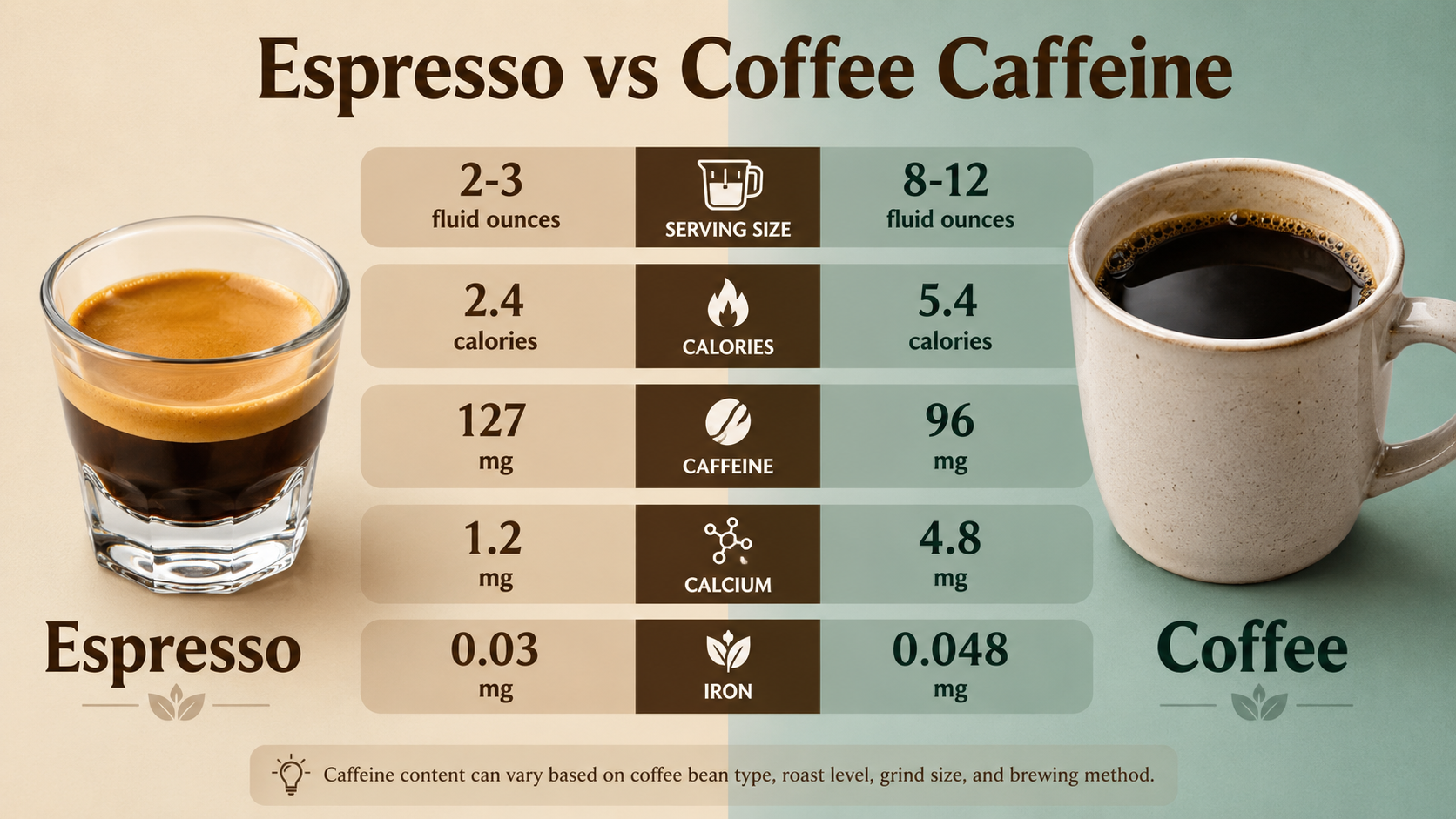
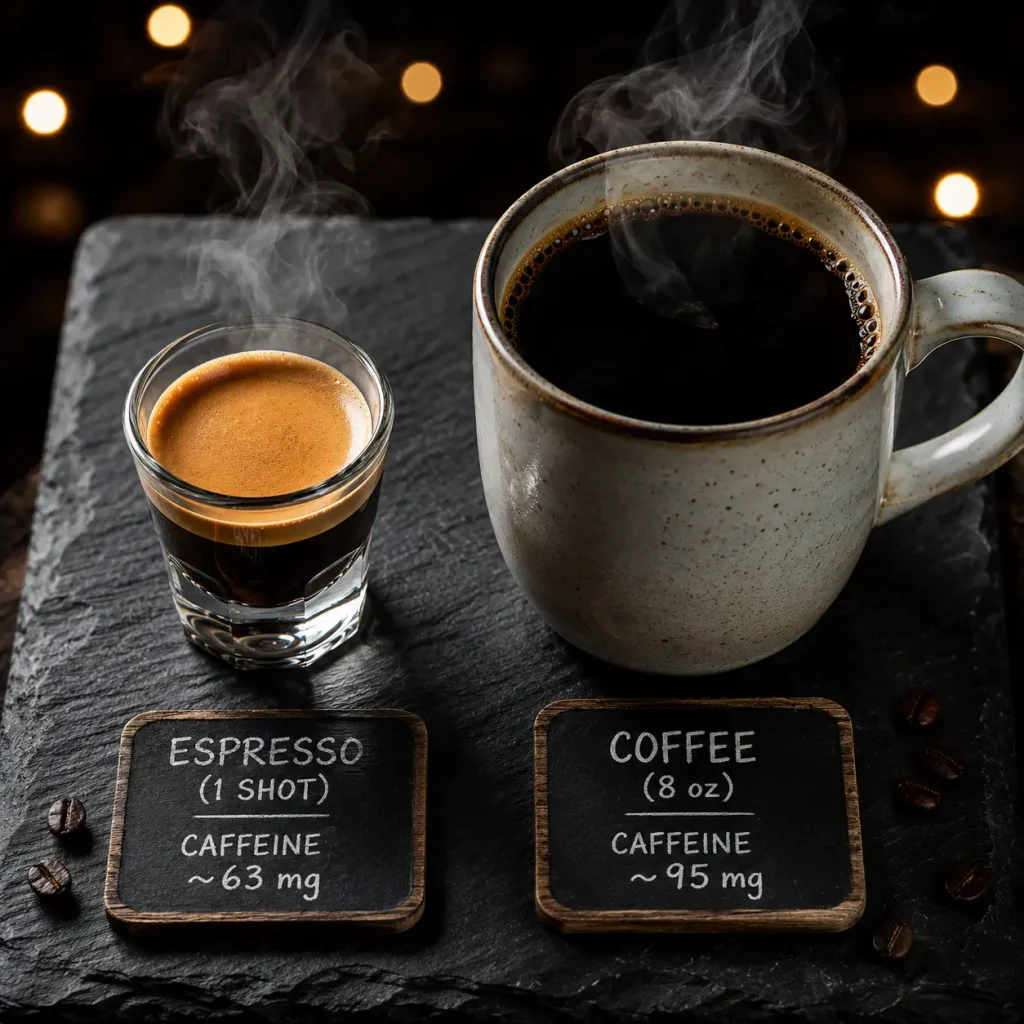
Here’s where things get interesting. One shot of espresso, (1 oz or approx. 30ml) has around 63 mg of caffeine. An 8 oz cup of drip coffee typically contains 80 to 120 mg of caffeine. Regular coffee actually, if you take the whole drink, has more caffeine per unit. But wait Espresso outshines by far in terms of ounces. Espresso has about 63 mg of caffeine per ounce, for example. An ounce of coffee has only about 12 to 15 mg. This is why espresso is referred to as “stronger”, despite a full cup of coffee containing more overall caffeine.
So does espresso have more caffeine than coffee? This question does not have just one clear answer. But by the cup, coffee usually edges ahead. Here’s a side-by-side comparison table for a clearer look.
| Feature | Espresso (1 oz shot) | Drip Coffee (8 oz cup) |
|---|---|---|
| Caffeine per serving | ~63 mg | ~80–120 mg |
| Caffeine per ounce | ~63 mg | ~12–15 mg |
| Brew time | 25–30 seconds | 4–5 minutes |
| Water temperature | 195–205°F | 195–205°F |
| Grind size | Very fine | Medium |
| Brew pressure | 9 bars | None |
| Serving size | 1 oz | 8 oz |
| Taste profile | Bold, concentrated | Mild, smooth |
| Typical calories | 3–5 kcal | 2–5 kcal |
| Common drinks made | Latte, cappuccino, macchiato | Black coffee, Americano |
Why does it matter so much that we judge the caffeine content per ounce?
Think of it this way. When you drink a double shot of espresso (2 oz) you receive approximately 126 mg of caffeine. That’s almost a full cup of coffee, if not more. Double shots are used in a lot of coffeeshop drinks. So your latte may be more powerful than you thought.
Learn How to Control Your Caffeine Intake With the Espresso vs Coffee Caffeine Ratio per Ounce. This can save you from a jittery afternoon if you are sensitive to caffeine. They can help improve performance & recovery, and if you need a little pick-me-up before your training session, you can select the appropriate beverage depending on your goals.
The Impact Of Roast Level On Caffeine
Many people get this wrong but here is a fun fact for you. MYTH — Dark Roast contains more caffeine than light roast. Actually, light roast beans will have a little more caffeine in them because roasting coffee beans burns off a little bit of caffeine. Because caffeine is lost in the roasting process, as the roast gets darker, the amount of caffeine in a given amount of roast goes down.
Espresso is usually made with dark roasts, so it is likely that a dark roast espresso offers a slight decrease in caffeine per bean than a light roast drip. Nonetheless, espresso is brewed in such a way that it remains very strong in caffeine content per ounce. An extra complexity to the espresso vs coffee caffeine fight that most people never think about.
Your Body and the Difference Between Caffeine
But have you also noticed that espresso seems to hit quicker? That’s not just your imagination. Espresso is served in one or two hot sips. That caffeine gets into your system, fast! Because coffee is more challenging to consume than either soda or energy drinks, caffeine gets absorbed into your blood more slowly and consistently.
Again, which most people don’t realize by rote this is more important. Downing an espresso may give a higher sudden jolt of energy. Pulkalai: The Coffee are gives a smoothly, Extended excite curve. Neither is better or worse. Depends what vibe you need an energy from.
Caffeine in Espresso or Caffeine in Coffee for the Different Lifestyles
Now onto more realistic caffeine requirements needing to be filled for actual people.
For the Morning Rusher
If you only have 10 minutes before work, a double shot of espresso is your deal. You consume over 100 mg of caffeine in less than two minutes. And, hey, as a bonus, it’s fast, and strong, and it just works. With little time on hand, the espresso caffeine vs coffee caffeine comparison is tipped in favor of espresso.
For the Work-from-Home Professional
In the morning, a nice, big drip coffee on your desk can provide you a nice steady energy in your body. You drink slow, your body gradually absorbs caffeine, and you skip that mid-morning crash some folks have after a rushed espresso shot.
For the Gym Goer
Research demonstrates that caffeine has the potential to enhance exercise performance. When it comes to going to the gym, a pre-workout espresso shot (or two) shoots caffeine into your system quickly. And the espresso vs coffee caffeine debate comes in to play here because timing is everything.
For the Light Sleeper
If caffeine disrupts your sleep, you prefer less of it later on. Even though caffeine is in total lower than in a full cup of drip coffee, a shot of espresso is less caffeinated in the afternoon. Knowing this helps you to make informed decisions.
Myths About Espresso and Caffeine
Myth 1: Espresso contains more caffeine False (in whole servings). Drip Coffee Has More Total Caffeine than a Single Shot of Espresso
Myth 2: Darker Coffee Is Stronger In fact, lighter roasts contain more caffeine. The difference in caffeine between espresso vs coffee is also a function of the roast level.
Myth 3: Decaf coffee has no caffeine. Even Decaf has from 2–15 mg of caffeine in each cup. It’s much less, but not zero.
Myth 4: Espresso is bad for your heart. In fact, evidence shows that most healthy (that is, not pregnant) adults now have a safe level of moderate espresso and coffee consumption until October 2023. Well in fact there are some studies which indicate cardioprotective properties.
What About Specialty Coffee Drinks?
This caffeinated category confusion only grows as modern coffee menus further complicate espresso vs coffee caffeine comparison. Now we are going to see some well-known beverages.Latte: 1–2 shots espresso, lots of milk. Caffeine: 63-126 mg. Americano — espresso cut with hot water. Caffeine is the same as the espresso used. Cold brew: made with coffee steeped for 12-24 hours in cold water. It can contain 200 mg or more caffeine per serving. Which in most cases beats espresso and regular coffee. And always ask how many shots before you remedy any caffeine tracking. There is a 100% difference between one shot and two shots.
How much caffeine is too much?
According to the FDA most healthy adults can safely consume 400 mg of caffeine each day. Which is about equivalent to four 8–ounce cups of coffee or six single espressos. Going over that on a consistent basis will give you headaches, anxiety, heart racing, and sleepless nights.
Everyone processes caffeine differently. Age, weight, what you take your medications for, and what genetic background you have all figure in. Others squirm after the first jab. Some can drink four cups of coffee and fall asleep like a baby. Stop chasing a magic number, and really become aware of how you feel with the caffeine.
Managing Your Espresso vs Coffee Caffeine Budget
A few simple, practical tips are:
- Track your shots. Many coffee shops will default to double shots, giving you 126 mg per drink without you even knowing.
- Switch drinks based on time. In the morning, drink espresso or strong coffee. Use lower caffeine options like a single-shot latte during the afternoon.
- Hydrate well. Caffeine has mild diuretic effects. Drink water alongside your coffee.
- Try half-caf. Try requesting half regular beans and half decaf beans. More flavour with reduced caffeine.
- Watch milk and sugar. But the caffeine in your drink doesnt change, so it is the calories from extras that of course continue to add up.
The Verdict: Which One Should you Get?
For more caffeine total in one cup of coffee, choose a high cup of drip coffee. That said, if all you need is a quick shot of caffeine in a small serving, go with espresso. Espresso wins every single time if you want the highest caffeine per ounce.
There is no right answer for the espresso vs. coffee caffeine debate. The optimal option, in your schedule, your body, and your drinking preferences. Others relish the process of a long morning pour-over. Some prefer a fast espresso kick in the morning. Both are great options. Both deliver real caffeine benefits. The key is that you know your drinks and use them intentionally.
Final thoughts: Know your caffeine and drink your coffee
Let’s wrap this up.Coffee is generally higher caffeine when measured by volume, although espresso has more caffeine oz for oz. The comparison between the caffeine content of espresso and coffee is dependent on how you make it and how you drink it. This will depend on factors like the coffee roast, the serving size and the brew method applied. Your numbers count, but so do your way of life and your sensitivities!
Using a strong shot of espresso or a good cup of drip coffee — both are packed full of the caffeine punch you need. This article teaches you how to brew a smarter, better, more enjoyable cup of coffee each and every day. Consumable if you love; Know your beverage Enjoy it.
Faqs About Espresso vs Coffee Caffeine
Is espresso higher in caffeine than coffee?
Ounce for ounce, espresso packs way more caffeine than drip coffee. One shot of espresso (about one ounce) has around 63 mg of caffeine, while an ounce of drip coffee usually has just 12 to 15 mg. But here’s the catch—people don’t usually drink just an ounce of coffee. An average cup of coffee is 8 ounces or more, so a full mug often winds up with more caffeine overall than a single espresso shot. So, it really depends on how much you’re drinking.
Is espresso stronger than coffee?
Espresso isn’t just stronger—it’s punchier. The flavor hits harder, and the caffeine is much more concentrated by volume. Shot for shot, espresso has way more caffeine. But if you compare the usual serving sizes, a big cup of regular coffee can have more total caffeine than one or even two espresso shots. So, “strength” can mean boldness in taste or actual caffeine content, depending on what you’re thinking about.
Can I drink espresso instead of coffee and consume less caffeine?
Definitely. If you switch from a full cup of drip coffee to just one or two shots of espresso, you’ll take in less caffeine. A typical shot of espresso sits at about 63 mg of caffeine, but a standard 12-ounce cup of brewed coffee has 150 mg or more. So, for anyone trying to scale back on caffeine but still craving coffee, switching to espresso shots makes sense.
Espresso vs Coffee: What is a Better Time of Day?
Since espresso provides caffeine right away, it is effective in the morning or before physical activity. Dripcoffee: this is better for those slow, slower mornings, when you prefer to spread your energy throughout the day with slower and steady sips. Stay away from both in the late afternoon or evening if you are sensitive to caffeine, as both can impair sleep quality for up to six hours after consumption.
Does the Coffee Bean Type Make a Difference on Espresso vs Coffee Caffeine?
In fact it matters a lot as the bean types. The Robusta beans has nearly double the caffeine from Arabica beans. Arabica beans tend to taste smoother and more mild but have less caffeine, so most specialty espresso blends use Arabica beans. Many cheaper blends of espresso include Robusta to add a stronger energy kick and head of crema. The more caffeine you enjoy from your espresso or coffee, the better it is to look for blends that have Robusta in the mix.