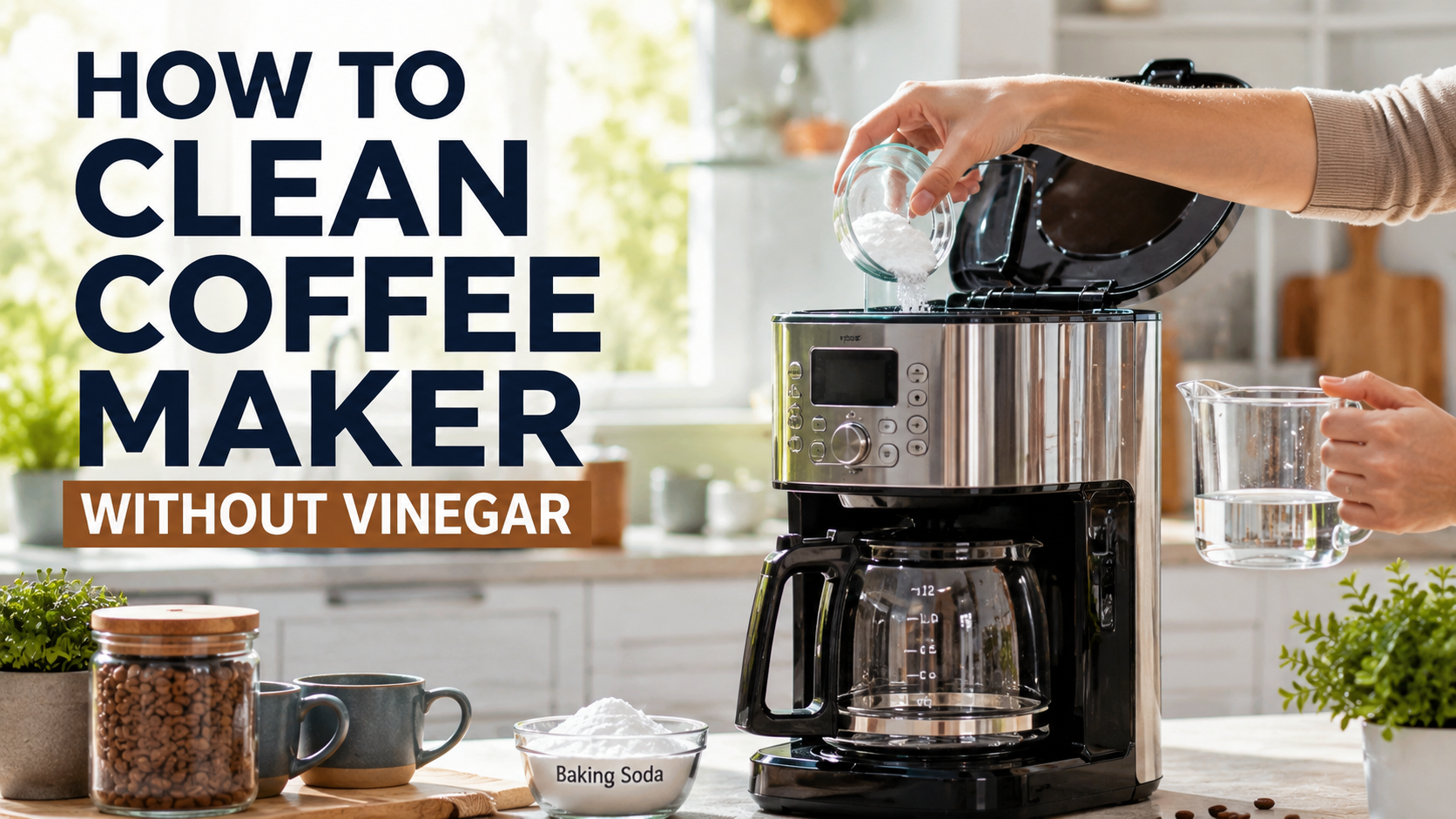
Coffee makers get dirty fast. Every time you prepare a cup, oils, minerals, and old coffee residue collect in the machine. Also see food (you have to wash coffee maker without vinegar)! You are, however, not a fan of the smell of vinegar or have run out of it and are in need of another alternative. And thankfully, good news, machine cleaning does not require vinegar. Plenty of household items that function just as well, This guide will take you through every method in a simple, step-by-step manner.
How to Clean Your Coffee Maker In Case You Are Wondering
Coffee machines are not just kitchen instruments. They are micro ecosystems that hold water, heat it, push it through pipe systems day after day. So water is constantly being forced through tubes, over time these tubes get clogged with mineral deposits from the tap water.
This accumulation, known as limescale, slows down brewing. It can also alter the flavor of your coffee to taste bitter or flat. This is one reason that so many people try to find out how to clean coffee maker without vinegar as cleaning regularly is what keeps your coffee tasting good and your machine running perfectly.
Signs Your Machine Is Begging For A Clean
If you know what to look for, your coffee maker will tell you when it needs attention. Some typical signs are sluggish brewing, suspicious sounds, or a moldy odor in the water tank. You may also notice white chalky deposits around the filter basket, or along the spout sometimes.
Another big clue: If you have been brewing some weird-tasting coffee lately. Old oils and trapped grounds can spoil the best beans. These warning signs, if caught early, can save you a significant headache down the road.
How To Clean Coffee Maker Using Baking Soda (Without Vinegar)
Odds are you have baking soda in your kitchen cabinets already, and it works promises on coffee makers. It’s mild, inexpensive, and doesn’t leave the same pungent aroma behind like vinegar. This makes it the most chosen answer to how to clean coffee maker without vinegar.
Combine 2 tablespoons of baking soda with 1 cup of warm water. Add this mix into the water reservoir and make sure to run a brewing cycle as usual. Allow to sit in the carafe for approximately fifteen minutes, then rinse everything out with some fresh water.
This first decomposes the oily coffee residues, but it simultaneously neutralizes odors. Then run another cycle with plain water to ensure they don’t taste like baking soda. Your coffeemaker will have a sea breeze smell, almost like new.
Why Baking Soda Works So Well
Baking Soda: A gentle abrasive and natural deodorizer. Suction of embedded coffee oils without scratching the metal or plastic bits inside the machine It differs from harsh chemicals and is so safe that you do not have to wear gloves or even a mask while using it.
It helps with that stale coffee smell that many machines develop too, and it balances acidity. Baking soda is a must-have for your cleaning regimens, if you brew coffee every day. To be honest it is one of the simplest hacks in the book.
Lemon Juice: A zesty option for an intensive clean!
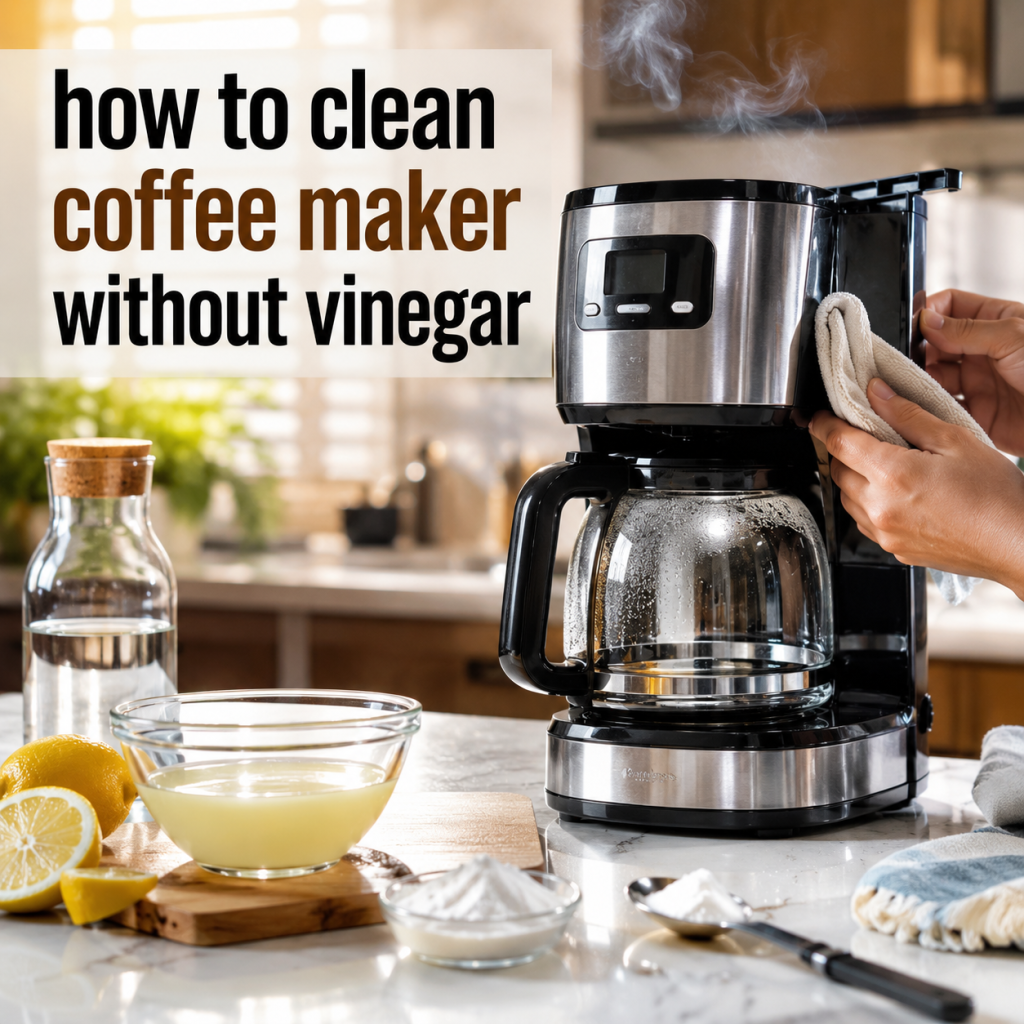
Another great solution to prepare your coffee make without vinegar is lemon juice. It has citric acid, which dissolves limescale like vinegar does, but smells way better. Your kitchen will smell like lemon formosa after.
Extract the juice of two lemons into your water reservoir and then fill the tank with water. Perform one complete brewing cycle and let the lemon water sit in the carafe for 10 minutes. This is followed by two cycles of untainted water to wash out every last drop of lemon residue.
Lemon juice is an excellent remedy for hard water stains and limescale, especially near the heating element. It is acidic enough to dissolve calcium deposits but gentle enough not to harm rubber seals. This is the method most coffee shop owners actually favor as it leaves no residual chemical aftertaste.
Bottle of Lemon Juice or Fresh Lemons
So, you may be a little confused on whether or not bottled lemon juice works just as effectively as fresh lemons. To put it quite simply, bottled juice works well enough for regular cleaning. Fresh lemons just provide slightly more citrus smell and just a tiny more cleaning power.
For heavy limescale buildup, fresh lemons are the better bet. Bottled juice saves time and does the job just as well for light, day-to-day maintenance. Regardless, you are opting for a natural product instead of rough chemical cleansers.
Quick Surface Cleaning With Dish Soap
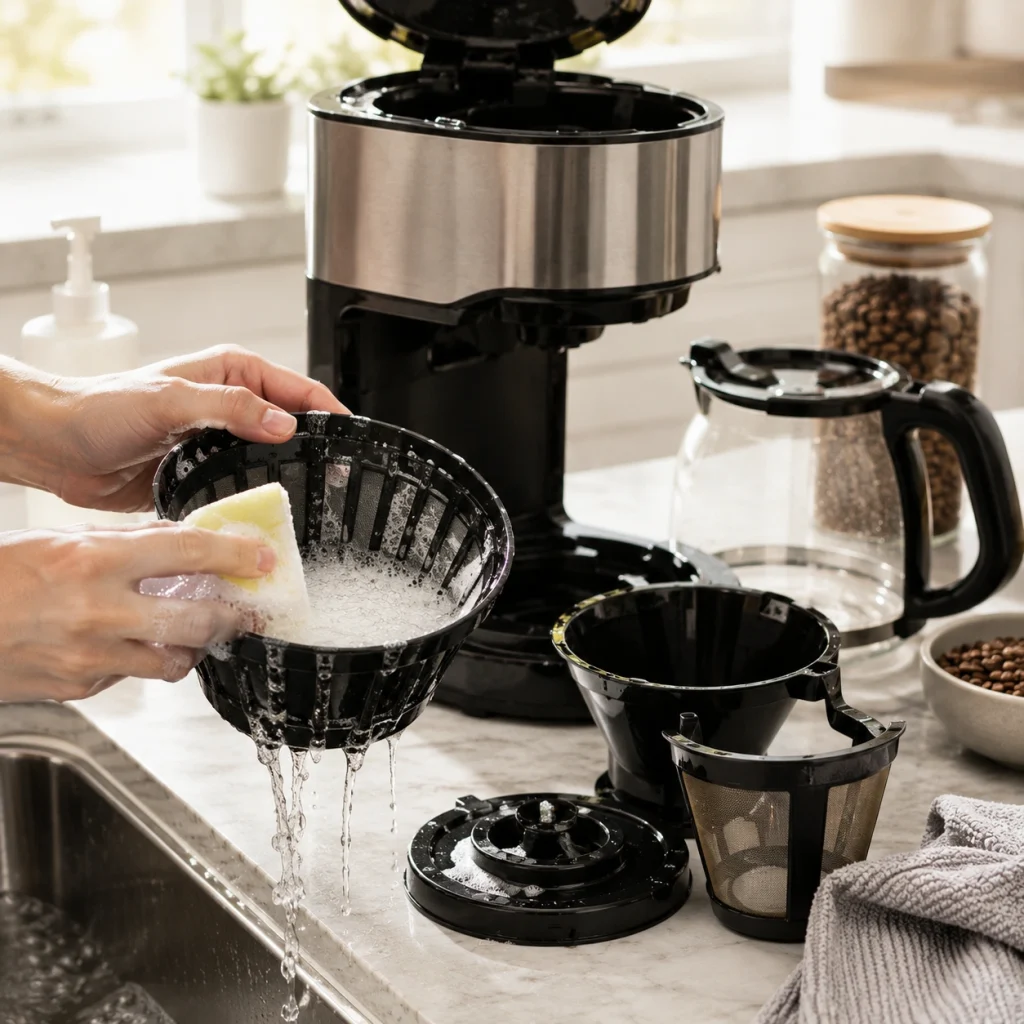
Sometimes a quick wipe of the visible and touchable! The carafe, filter basket and outer body of the machine clean nicely with dish soap and warm water. However, this is an easy step that plenty of guides on how to clean coffee maker without vinegar seem to overlook. You just need to Wash the removable segments with a hot soapy water and a gentle sponge. Do not use anything abrasive as eventually nicks will trap bacteria and old coffee oils. Wash everything really well to make sure there’s no soap residue in your next cup.
Dish soap does not nuke buildup deep inside the machine, but maintains proper hygiene on the surface. Use this cleans with baking soda or lemon juice for a holistic clean. Consider dish soap your daily routine and the other methods your monthly deep cleans.
Table — Natural Ways To Clean Coffee Makers
A summary table to help you select a method you need.
| Cleaning Method | Best For | Cleaning Time | Smell Left Behind | Frequency |
|---|---|---|---|---|
| Baking Soda | Odors and light buildup | 15-20 minutes | None | Every 2 weeks |
| Lemon Juice | Mineral and limescale removal | 20-25 minutes | Fresh citrus | Once a month |
| Dish Soap | Surface and removable parts | 5-10 minutes | None | After every use |
| Hot Water Cycle | Daily maintenance | 5 minutes | None | Daily |
| Denture Tablets | Stain removal in carafe | 30 minutes | Mild minty | Monthly |
This table allows you to easily select the best tool for the job without any uncertainty. The best results over time will come from not just these few methods when combined.
Only for cleaning denture tablets: the trick that you need to know
All the way to denture tablets: Yes, you read this: denture tablets are not just for denture anymore. They are imbued with fizzing agents which snap to-fetti each and every stain and grime clung to glass surfaces. You would not believe that this trick is effective in cleaning coffee maker, and many of those searching for how to clean coffee maker without vinegar are surprise to learn.
Use two denture tablets and fill the carafe with warm water. Allow it to sit for approximately thirty minutes, allowing the action of fizzing to do most of the work for you. Scrub lightly using a sponge, rinse thoroughly, and brew again.
This hack is most effective at well-used coffee carafes deep brown with coffee stains going back months. This is also useful for cleaning thermoses and travel mugs with stubborn residue. Just be sure you rinse extremely nicely, as denture tablets include substances to clean that you just don’t want to soak up.
Other Helpful Pantry Items
One part salt, three parts ice can surprisingly scour the inside of a carafe. Tip this around for a minute and then rinse and soap up in warm soapy water. This technique is similar to sandpaper, it basically scrapes all the dried coffee stains.
Club soda is another oft-overlooked choice for getting rid of odors and light buildup. Load some into the reservoir, run a cycle, and then flush with plain water. It is bubbly, benign, and activates stubborn stinks rather excellently.
How Often Should You Clean Your Coffee Machine
It will all depend on how often you brew, but most coffee experts recommend a deep clean once every month. Which makes monthly cleaning a necessary practice if you drink coffee every day, so your machine functions at its maximum efficiency. Every six to eight weeks, light users can typically draw this out.
Hard water areas require more frequent cleaning since minerals will accumulate quicker. If you live in areas with really hard tap water then clean every 2 to 3 weeks instead. This build up can happen, but using filtered water for your machine can actually slow this process down quite a bit.
These are Quick Daily Habits That Make A Big Difference
Unlike most brands, rinsing the carafe and filter basket each time you brew helps to avoid oils solidifying overnight. This is a small habit that only takes about 30 seconds to do, yet saves you a ton of scrubbing time down the road. However, wiping the exterior with a slightly damp rag prevents dust and coffee splashes from accumulating.
Air drying your machine with the lid open posts no possibility for mold or mildew to develop on the interior. Airflow really matters here, as bacteria love to breed in closed, damp spaces. Small, little habits that eventually add up to a machine that lasts for many more years
Running Daily Cleaning Schedule You May Follow Today
We can bring it all back into one simple routine. Here are a few you’ll found in one easy, repeatable plan every month to clean coffee maker without vinegar.
- Detach the filter basket and carafe, and wash both in warm, soapy water.
- Mix baking soda with warm water and take it through a complete brewing cycle.
- Allow the solution to sit in the carafe for fifteen minutes then rinse thoroughly.
- Run two more cycles of unfiltered water, to remove any remaining residue.
- With a damp cloth, wipe the outside of the machine.
- Replace baking soda with lemon juice once per month to fight against mineral buildup.
Because this time we guarantee that your coffee maker will remain, carrying out its cleaning without once approaching a bottle of vinegar. It requires less than 30 minutes of total time and really improves the flavor. And your nose too? Your coffee will thank you.
Popular Mistakes Every Person Makes While Cleaning
The largest error people make is by skipping the rinse cycle. The remnants of those baking soda or lemon juice treats can affect how your next pot of coffee tastes. Run at least an additional cycle of clear water for safety.
Another mistake that leads to a chalky aftertaste is the excessive use of cleaning solution. Do not guess or eyeball amounts, stick to the measurements stated above. With coffee maker cleaning, more is not always better.
It is just as bad if you forget about the parts you cannot see so clearly as well. The conduit from the reservoir to the brew basket gathers residue just like everywhere else. Because your preferred cleaning solution drills down to these areas with a complete cycle.
Conclusion on How To Keep Your Coffee Maker Clean
Vinegar is not a trip to the store to go and get it toothpaste for cleaning out your coffee maker. You can use baking soda, lemon juice, dish soap and even denture tablets they all get the job done very well. The different methods target different types of dirt, from greasy ridges to tough water stains.
Having known how to clean coffee maker without the use of vinegar, there basically are no excuses for a dirty machine. To sum it up, a clean coffee maker makes for better coffee, lasts longer, and saves you money on repairs or replacements. Choose a method that works for you, commit to it, and enjoy a more fresh cup of coffee every single morning.
Frequently Asked Questions
Can I use baking soda every time I clean my coffee maker?
Baking soda — Yes, it is gentle enough to use regularly without harming your machine. For regular cleaning, it is most effective biweekly. But if you do, just make sure to rinse well later on, otherwise there could be residual flavor.
Does lemon juice harm rubber parts in the coffee maker?
Lemon juice is far too mild to damage the rubber seals or gaskets. It’s actually less harsh than many of the retail descalers. Just simply do not leave them as is for excessive amounts of time, as many days of sitting can start to kill parts.
How do you know if my coffee maker have limescale?
Obvious signs include slow-moving brew cycles, and white chalky spots appearing nearly the spout. You may also taste something metallic or bitter in your coffee. This accumulation is much more common in hard water places than soft water areas.
Is it safe to drink coffee immediately after a baking soda clean?
Once you run two complete cycles of just water, it is perfectly safe. The process is known as rinsing — not rinsing can leave a little soap or chalk in the mouth. To be sure, always taste a small sip before brewing a full pot.
Which household items work the best and the fastest to clean a coffee maker?
Undoubtedly, this will get you clean the quickest, generally, in no more than ten minutes using dish soap and warm water on any visible parts. Baking Soda as well provides a quick and effective solution for deeper cleaning as well. It has more time than soap over the long run, but lemon juice fights hard edges.