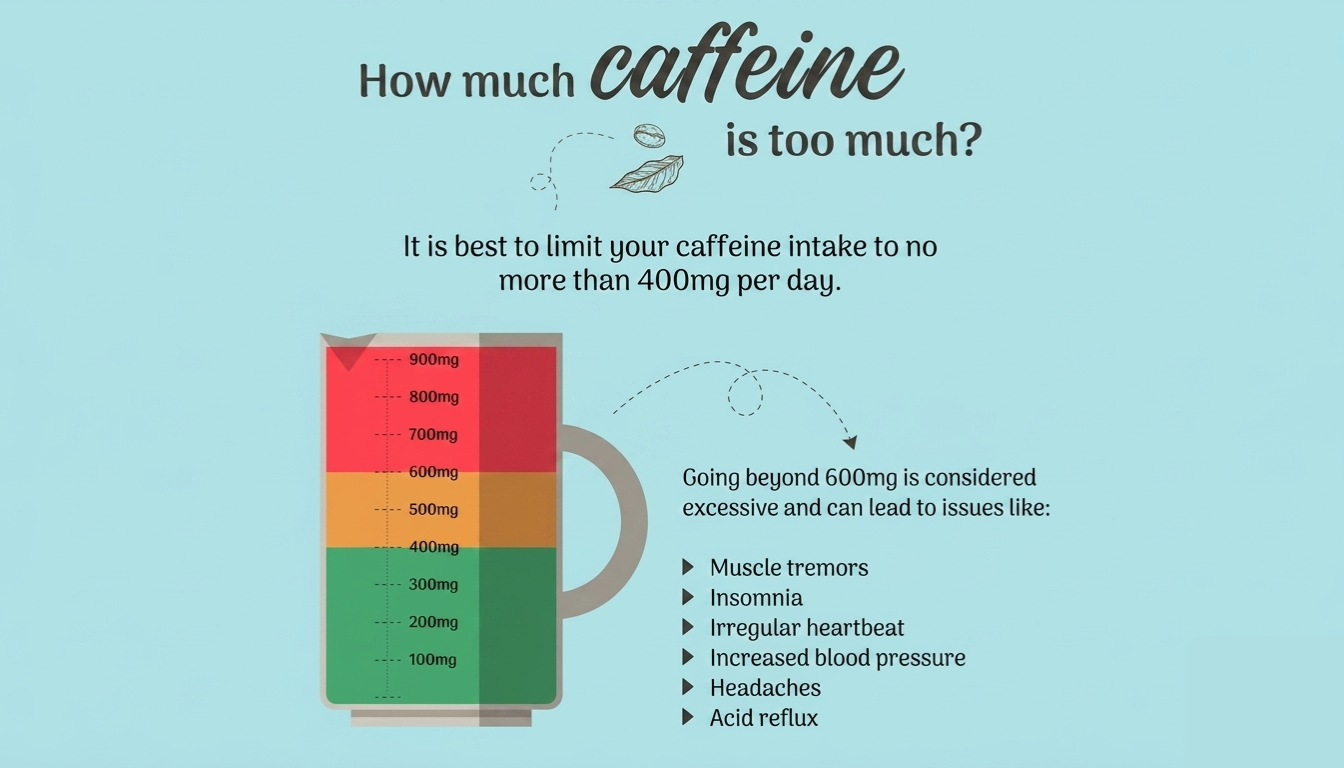
Let’s be honest — most of us don’t start our morning thinking about caffeine limits. We just want our coffee, and we want it now. But somewhere between your second cup before noon and that 4 PM energy drink to push through the afternoon slump, a fair question starts creeping in: how much caffeine is too much?
It’s not just a wellness buzzword. It’s a genuinely important question, especially in a world where caffeine is hiding in everything from your morning espresso to your pre-workout, your afternoon tea, and even some headache tablets. So let’s break it down in a way that actually makes sense — no lab jargon, no scare tactics, just straight talk.
The Number Everyone Throws Around — And What It Actually Means
You’ve probably heard the “400 mg per day” guideline. That’s the number health authorities generally point to as the upper safe limit for healthy adults. To put that in perspective, a standard 8-ounce cup of brewed coffee has roughly 80–100 mg of caffeine. So 400 mg is about four regular cups of coffee spread throughout the day.
But here’s where people go wrong — they assume that as long as they stay under 400 mg, everything is fine. And for a lot of people, that’s true. But caffeine isn’t a one-size-fits-all substance. Your age, body weight, genetics, medication use, and even your gut bacteria can influence how your body processes it. So the question of how much caffeine is too much doesn’t have a single answer that applies to every single person on the planet.
Some people can throw back three espressos and go straight to sleep. Others feel wired, anxious, and borderline chaotic after just one cup. Both experiences are completely valid — it’s biology, not weakness.
When Caffeine Stops Being Your Friend
There’s a tipping point where caffeine shifts from “helpful stimulant” to “uninvited stress response.” Most people have felt it at least once — the jittery hands, the racing heartbeat, the sudden inability to sit still. That’s your body telling you that you’ve crossed a line.
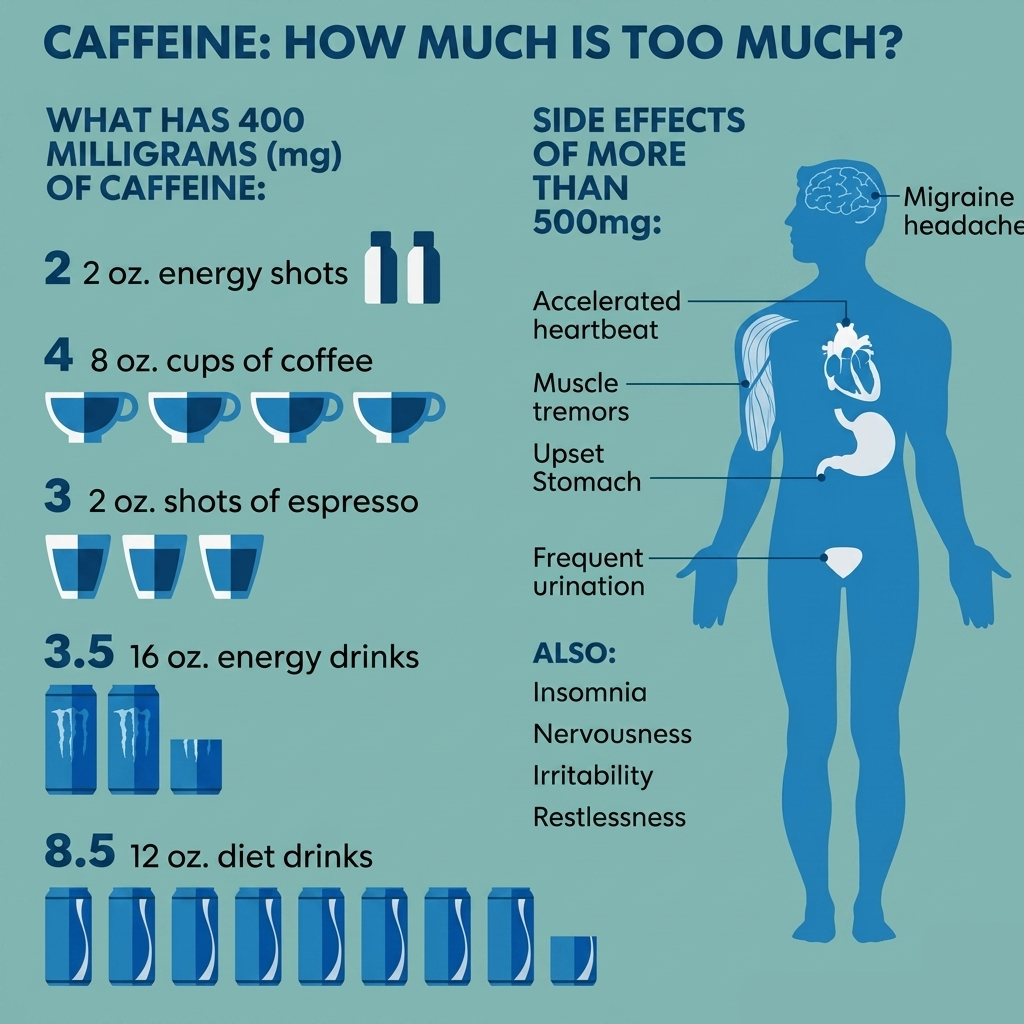
Common signs you’ve had too much caffeine include:
- Racing or irregular heartbeat
- Anxiety, restlessness, or irritability
- Headaches (yes, too much can cause headaches just like too little)
- Difficulty sleeping even when you’re exhausted
- Upset stomach or acid reflux
- Frequent urination
- Muscle tremors
These aren’t just minor inconveniences. Regular overconsumption can disrupt your sleep cycle so badly that you wake up tired, reach for more caffeine to compensate, and land yourself in a loop that’s hard to break. Sleep deprivation and caffeine dependence tend to fuel each other in the worst possible way.
The Warning Signs You’re Overdoing It
Here’s a table that cuts through the noise. These are the symptoms that tend to show up across different caffeine intake levels:
| Caffeine Intake | Common Symptoms |
|---|---|
| Under 200 mg/day | Alertness, improved focus, mild mood lift |
| 200–400 mg/day | Possible mild anxiety, slight heart rate increase in sensitive individuals |
| 400–600 mg/day | Jitteriness, headaches, trouble sleeping, irritability |
| 600–1,000 mg/day | Heart palpitations, nausea, rapid breathing, severe anxiety |
| Over 1,000 mg/day | Caffeine toxicity risk: seizures, dangerously high heart rate, vomiting |
That last row isn’t hypothetical. Caffeine toxicity is real, and it’s become more of a concern with the rise of concentrated caffeine powders and certain supplements. A teaspoon of pure caffeine powder can contain the equivalent of 28 cups of coffee. That’s not a typo.
The Hidden Caffeine You’re Probably Not Counting
One reason so many people accidentally tip into “too much” territory is that they’re only counting their coffee. But caffeine is everywhere — and some of the sneakiest sources aren’t things you’d immediately think of.
- Energy drinks — A single can can pack 150–300 mg, sometimes more
- Pre-workout supplements — Often contain 200–400 mg per serving
- Black and green tea — Around 30–70 mg per cup, but it adds up
- Sodas — A can of cola has about 35–45 mg
- Dark chocolate — A 70% cocoa bar can have 50–70 mg per 100g
- Some pain relievers and cold medicines — Excedrin, for example, has 65 mg per tablet
When you start adding all of this up across a full day, it’s surprisingly easy to hit 500–600 mg without ever thinking you overdid it. That’s exactly why understanding how much caffeine is too much requires looking at your entire daily intake, not just your coffee mug.
Special Groups Who Need to Be Extra Careful
While 400 mg is a reasonable benchmark for healthy adults, certain groups should aim much lower — or cut caffeine out almost entirely.
Pregnant women are typically advised to keep their intake under 200 mg per day. Higher amounts have been linked to increased risk of low birth weight and complications during pregnancy. This is one situation where being conservative is clearly the smarter call.
Teenagers and children have lower tolerances and are still developing neurologically. Many health organizations recommend that children under 12 avoid caffeine altogether, and teens should stay well below adult limits.
People with anxiety disorders, heart conditions, or high blood pressure often find that even moderate caffeine use worsens their symptoms. If you fall into this category, it’s worth having a real conversation with your doctor about your intake rather than relying on general guidelines.
People taking certain medications — particularly stimulants, some antidepressants, or thyroid medications — may experience amplified effects or dangerous interactions with caffeine. Again, a conversation with your healthcare provider goes a long way.
How Your Body Builds Tolerance Over Time
Here’s something interesting: regular caffeine users often feel less of an effect over time. That’s because your brain adapts by producing more adenosine receptors — the very receptors caffeine blocks to make you feel alert. The more receptors you have, the more caffeine you need to get the same result.

This tolerance effect is one of the sneakier reasons people gradually increase their intake without realizing it. What started as one cup becomes two, then three, and suddenly you’re wondering why coffee doesn’t feel like it’s doing anything anymore.
The flip side of this tolerance is withdrawal. If you regularly consume caffeine and suddenly stop, expect headaches, fatigue, brain fog, and mood dips for anywhere from two to nine days. It’s not dangerous, but it’s uncomfortable enough that many people cave and go back to their usual intake just to make the symptoms stop.
Finding Your Personal Caffeine Sweet Spot
So how do you figure out how much caffeine is too much for you specifically? Start by paying attention. Track your intake for a week — all of it, including the hidden sources. Then notice how you feel. Are you sleeping well? Are you calm and focused, or scattered and anxious? Is your heart rate elevated more than it should be?
If you’re sleeping poorly, feeling jittery, or relying on caffeine just to feel normal rather than feel good, those are signs you’ve drifted past your sweet spot. The goal isn’t to eliminate caffeine — for most people, moderate use is completely fine and even has some real health benefits. The goal is to use it intentionally rather than habitually.
A practical strategy: set a caffeine cutoff time of at least 6 hours before bed. Caffeine has a half-life of around 5–6 hours in most adults, meaning half of it is still in your system six hours after consumption. A 3 PM coffee could still be disrupting your midnight sleep window more than you’d expect.
The Bottom Line
Understanding how much caffeine is too much isn’t about becoming paranoid every time you reach for a cup of coffee. It’s about being aware of how your body responds, knowing where caffeine is hiding in your diet, and respecting the limits that actually apply to your situation — not just the average adult guideline.
Most healthy adults are totally fine staying at or under 400 mg per day. But if you’re experiencing anxiety, poor sleep, heart palpitations, or just a creeping sense that you need caffeine to function, those are worth taking seriously. Your energy shouldn’t come at the cost of your wellbeing.
Frequently Asked Questions
Is 400 mg of caffeine a day really safe for everyone?
400 mg is a general guideline for healthy adults, but individual tolerance varies based on genetics, body weight, and health conditions. Always listen to your body rather than treating this number as a universal rule.
What are the first signs that I’ve had too much caffeine?
The most common early signs are a racing heartbeat, jitteriness, and sudden anxiety or restlessness. If you notice these after your usual cup, it’s a clear signal to cut back for the day.
Does caffeine in tea and chocolate count toward my daily limit?
Absolutely — all caffeine sources add up, whether it’s tea, dark chocolate, soda, or even certain pain relievers. Tracking your full daily intake gives you a much more accurate picture than counting coffee alone.
How long does caffeine stay in your system?
Caffeine has a half-life of about 5–6 hours, meaning half the amount is still active in your body hours after consumption. A late afternoon drink can easily affect your sleep quality even if you don’t feel wired at bedtime.
Can I build a tolerance to caffeine over time?
Yes — regular use causes your brain to adapt, which means you’ll need more caffeine to feel the same effect over time. This gradual tolerance is one of the main reasons daily intake tends to slowly creep higher without people noticing.