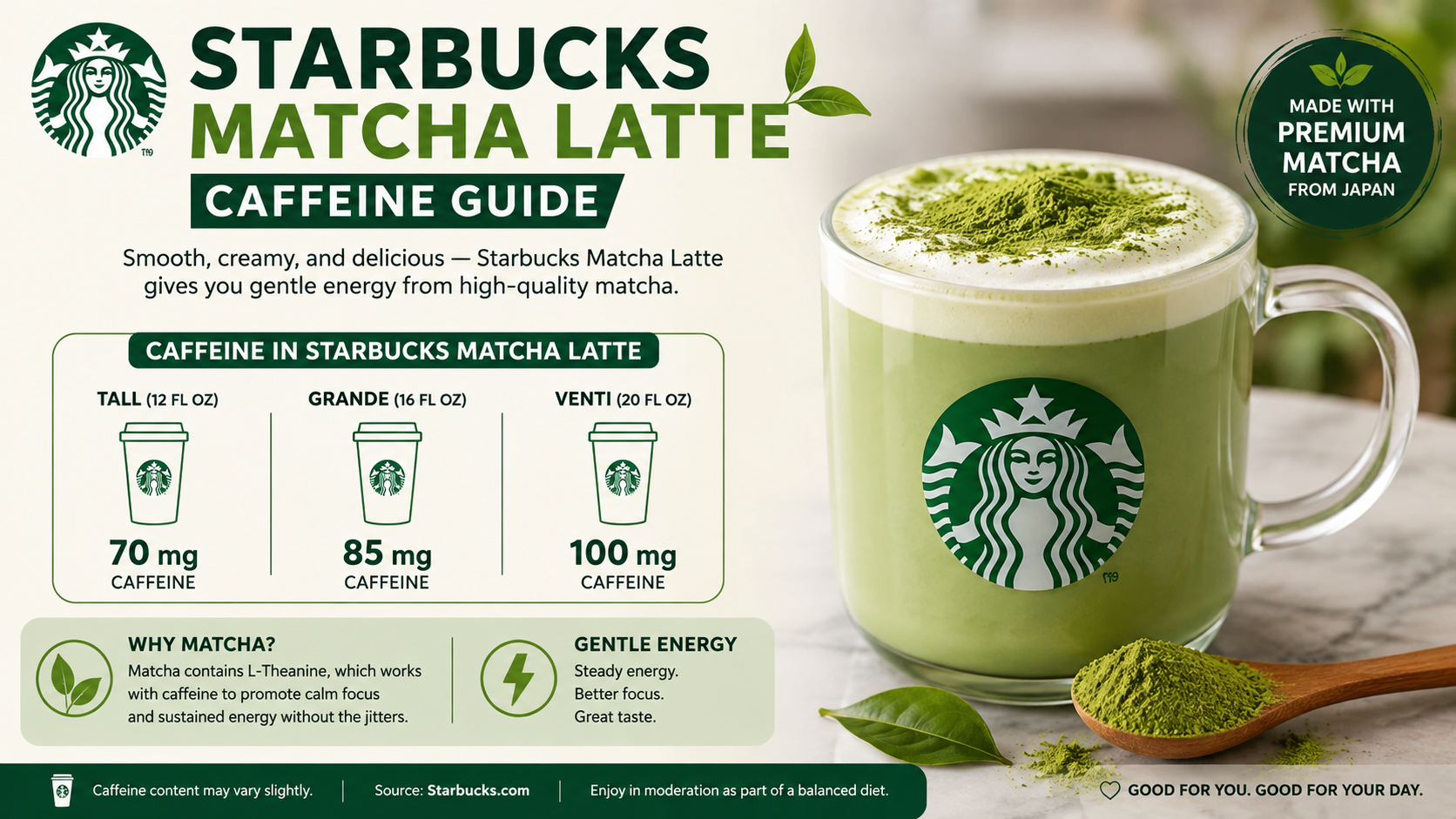
There’s a matcha drink blowing up right now. Green, creamy, and a little posh, they appear on social media almost as much as coffee. If you’re curious about Starbucks Matcha Latte Caffeine, you may want to know the real story before ordering your next cup. This guide explains everything in simple, easy-to-understand language with no confusing jargon. You’ll learn how much caffeine it contains, how it compares to coffee, and the best way to order it.
Why Matcha Has Become the Drink Everyone Talks About
Matcha is not new. It has over the centuries been consumed in Japan within tea ceremonies. What is new is how it has taken off in places other than Japan, in particular coffee shops like Starbucks.One aspect of the charm is the color. That bright green shade is fabulous in pictures and people love to post it. But taste matters too. It possessed a silky, grassy flavor which blended nicely with cold milk and a hint of sweetness. Health has to do with that as well. One of the many reasons why people go for matcha is that they are seeking something that is a little softer than coffee. Now, this leads to the BIG question every fan will ask: how much caffeine from a stern matcha latte actually lands in a cup.
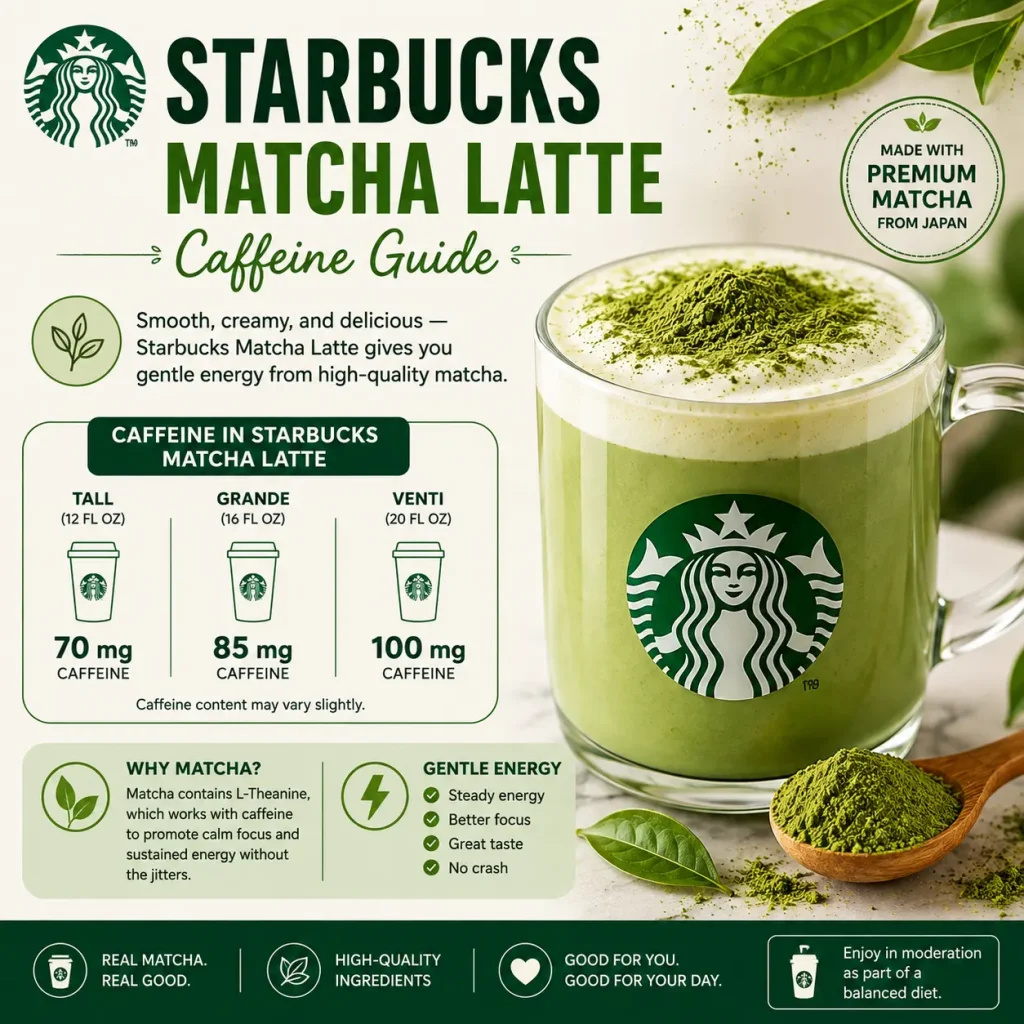
Breaking Down the Real Starbucks Matcha Latte Caffeine Numbers
Lets jump right into the stats as that is fodder most people look for. A Starbucks Matcha Latte (grande, 16 oz) has approximately 80 mg of caffeine. That number is entirely from the matcha powder, because there isn’t an espresso shot in there.
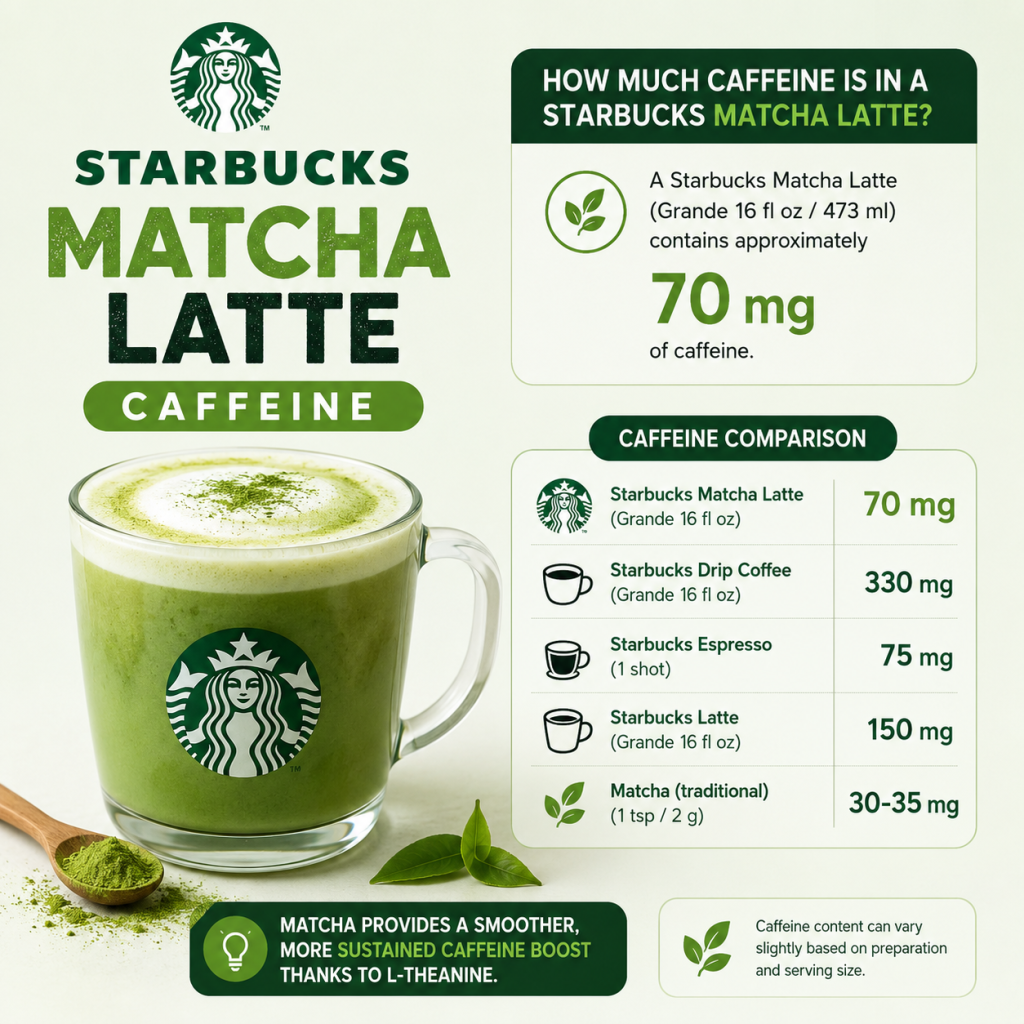
By comparison, a grande brewed coffee from Starbucks contains approximately 310 milligrams. This is why a matcha latte is substantially lighter on the jolt. For anyone trying to cut back on caffeine while not giving up café, this drink works perfectly towards that.
Here’s a quick table to make things easier to scan.
| Drink Size | Approximate Caffeine (mg) |
|---|---|
| Short (8 oz) | 40 mg |
| Tall (12 oz) | 60 mg |
| Grande (16 oz) | 80 mg |
| Venti (20 oz) | 100 mg |
Matcha powder is hand-measured, so these numbers can vary a bit depending on how the barista scoops it. Generally speaking, the caffeine levels for a starbucks matcha latte stays relatively consistent through most locations.
How the Caffeine Compares to a Regular Latte
A regular Starbucks latte is made with espresso, providing a heavier, quicker caffeine kick. A grande latte made with two shots has about 150mg. That’s nearly double what you would get from matcha. The main difference lies in the process of how the plant is handled. Espresso comes from roasted coffee beans, which inherently contain more caffeine per serving. Matcha is ground tea leaves with less of a jittery caffeine release due to the way it’s ingested.
This slower release contributes to the smoothing properties people experience by drinking matcha caffeine. There is not the instantaneous jolt, and often less of the crash later.
How come the caffeine in matcha seems so different from coffee?
People are often surprised by this part. However, comparatively matcha contains less caffeine overall, which many matcha drinkers note delivers a calmer and longer-lasting effect. No, there’s real science to that feeling—not just speculation.
The difference comes down to how the plant is processed. Espresso comes from roasted coffee beans, which naturally hold more caffeine per serving. Matcha comes from ground tea leaves, which release caffeine more slowly into the body. And that’s at least part of why so many people grab a matcha latte when they have a packed work load. It provides a boost without the jitters and rapid heart beat that are common side effects of high doses of caffeine for some individuals. If you’ve ever felt a calmer vibe after drinking matcha compared to espresso, that’s probably why.
How L-Theanine Smooths Out Your Buzz
L-theanine slows Caffeine absorption into the bloodstream. Instead of an immediate spike —what your body gets is a slower, more sustained release. Starbucks matcha latte caffeine experience is so calming and not jumpy, that is why Which is why many liken it to tea as opposed to an energy drink. Both help you up, but one is more mellow. It’s a major reason people who are sensitive to caffeine tend to be so loyal to matcha.
Starbucks Matcha Latte Copycat Recipe
We at Starbucks use a pre-sweetened matcha mix. It is sold as a powder or paste, then combined with steamed milk. The baristas will then whisk or blend it until it is that bright green. Starbucks matcha unlike traditional Japanese matcha, which consists of pure ceremonial grade tea, is a bit sweeter and less rich in taste. That just makes it more accessible for people who are new to matcha and may find 100% matcha a little too intense.
This is also important for caffeine content. Due to the sugar and other contents of the blend, the ratio of pure matcha to milk is smaller than what is to be expected in a traditional tea ceremony bowl. This is part of the reason that starbucks matcha latte caffeine is on the low end compared to strong matcha made at home with whole leaf tea powder.
Does Hot, Iced or Blended Affect the Caffeine?
Good news here. Its caffeine content is approximately the same if you get it hot, iced or in a blended drink similar to a Frappuccino. Generally speaking, temperature is unable to destroy or enhance caffeine in any significant manner. What changes isthe ratio if more ice is added or a larger cup size is used without increasing the amount ofmatcha. This means a venti iced matcha latte with extra ice is likely to taste a bit watered down even though the actual caffeine count is still relatively close to the size listing.
Smart Ways to Adjust Your Matcha Order
Some days you need a little lift. That’s fine some days; however, other days you need something with more kick to get through a long shift or a difficult deadline. The good news, however, is that Starbucks is willing to allow you to adjust your matcha to your liking. You can ask for an additional scoop of matcha powder which will elevate the caffeine a tad. And if you want that flavor and color but are sensitive to caffeine, you can ask for less matcha. Don’t be shy; this is normal barista stuff.
A few examples of how those folks customize their order:
- One bonus scoop of matcha: Makes the drink a little stronger in flavor and caffeine.
- Half sweet: Reduces sugar while maintaining the same caffeine content
- Milk Swap: Oat or Almond? Caffeine Content: No, only texture, taste.
Double it with a shot of espresso: It becomes a sort of hybrid drink, in that it does now have a much stronger caffeine effect.
That last option is a favourite that busy folk opt for when seeking to enjoy the benefits of matcha but needing a more exuberant energy lift. Regulars call it a “matchiato,” even though it’s not on the official menu.
Ordering Tips for Beginners
If you have never had matcha try the classic grande size. Provides Good taste and control over a manageable starbucks matcha latte caffeine load without going overboard. The sweetness or type of milk can be always modified according to your preference. Or in summer just say iced. It makes for a lighter and more refreshing pour, particularly with oat milk. Most baristas will also recommend tasting it half sweet to begin with, as the standard version is very sweet for newbies.
SlideshareAnd in order to know how beneficial or tricky matcha can be, one must be aware of its nutritional and health directives. Matcha is a milder choice overall, but is still not caffeine-free. Pregnant, nursing, or caffeine-sensitive people should still monitor their daily consumption. If you drink a few cups, even 80 milligrams can add up. And kids and teens should also limit caffeinated beverages in general, caffeine from all sources (including matcha). Some now and then is usually all right, but it ought to not be swapped for water or milk every day.
It’s of course wise to consult a doc, especially if your on some medication that reacts with caffeine. Matcha may seem soft and cuddly, but that caffeine is still a-dead, and it’s still running through your system.
Matcha vs Coffee: Which One Suits Your Day More
Theres no right answer here really. Ultimately, which drink suits your needs best is totally up to you. Others have to dump strong coffee down their throats in the morning for an instant buzz, while some consumers enjoy the more mellower lift matcha offers us. If you require some serious energy for an early meeting or an intense workout, coffee may be more beneficial for you due to its higher caffeine content. If you want something to sip on and take your time with through a few hours afternoon without feeling like a rabid hamster, matcha tends to do well with the steady kind of focus.
In reality, a lot of people like each, just not at the same time. The common rhythm of any normal cafe-goers: coffee in the morning, matcha in the early afternoon. Essentially, the goal is to listen to your body and establish a schedule that feels satisfying.
Wrapping It All Up
So, it is no surprise that matcha lattes have earned their position as a beloved café choice. They go down easy, they look gorgeous and they have a mellower caffeine kick than ordinary coffee drinks. Knowing how much caffeine is in a starbucks matcha latte can help you make better decisions, even if your goal is to limit caffeine or just curiosity in your drink.
A grande matcha latte contains around 80 milligrams of caffeine, which is way lower than a normal brewed coffee. All that energy felt calm and smooth instead of sharp and jittery, thanks in part to L-theanine. Whether you drink it hot, iced or blended, the caffeine levels remain fairly consistent by style. All that matters at the end of the day is what works with your body, and your schedule. Now that you know the real numbers behind caffeine in your starbucks matcha latte, you can order with confidence and savor every sip.
Frequently Asked Questions
How much caffeine is in iced matcha latte Starbucks grande?
One grande Starbucks matcha latte has approximately 80 milligrams of caffeine. That’s about a quarter of the amount you would get from a standard brewed coffee. If you’re looking for a light lift during the day, this is a great option.
Is matcha caffeine stronger than coffee caffeine?
No, matcha typically has less caffeine per serving than coffee does. But thanks to L-theanine, the caffeine in matcha tends to feel smoother and more sustained. Having the best in materials does not mean you consume stronger. Its about how your body absorbs and uses it.
Can I add extra caffeine to my matcha latte at Starbucks?
There is a coffee on top of matcha, yes, create a ton of matchas in place, because yes, instead I will add espresso shot espresso powder aspirational. But either option will noticeably boost the caffeine content. Baristas are more than happy to adjust the drink according to your energy requirements.
Does iced matcha have less caffeine than hot matcha?
Not really, caffeine content is a pretty constant amount regardless of temperature. The only thing that’s different is the taste and texture, not how strong it is with caffeine. While some ice may lessen the flavor slightly, it will not actually weaken the caffeine level itself.
Is Starbucks matcha latte caffeine safe during pregnancy?
While matcha does contain real caffeine, pregnant people should still monitor their total daily caffeine intake. Even lesser sums can cumulate during the day. However, always better to consult a doctor and these are just general recommendations.