Coffee is everywhere. You wake up and reach for it. You drink it before work, during meetings, and sometimes after dinner. But somewhere along the way, someone told you that coffee dehydrates you. Now you feel guilty about every cup.
So does coffee dehydrate you? Let’s actually look at what the science says, because the real answer is more interesting than you think.
What Does Dehydration Even Mean?
Before we talk about coffee, let’s get clear on dehydration.
Dehydration happens when your body loses more fluid than it takes in. Your cells need water to work properly. When they don’t get enough, you feel tired, get headaches, and your urine turns dark yellow.
Your body is about 60% water. It needs around 2 to 3 liters of fluids every day just to keep things running. That fluid doesn’t have to come only from plain water. It can come from juice, tea, food, and yes, coffee too.
How Much Coffee Is Safe?
Most healthy adults can safely drink around 3 to 4 cups of coffee daily. That equals about 400 milligrams of caffeine.
The amount changes depending on the coffee type.
Here is a simple guide:
| Drink | Average Caffeine |
|---|---|
| Small brewed coffee | 95 mg |
| Espresso shot | 63 mg |
| Instant coffee | 60 mg |
| Decaf coffee | 2 to 5 mg |
Some people are more sensitive to caffeine. They may feel jittery after only one cup. Pregnant women usually need lower caffeine intake. Children and teens should also avoid too much caffeine.
Why People Think Coffee Dehydrates You
Here’s where the story started. Coffee contains caffeine. Caffeine is a mild diuretic. A diuretic makes you pee more than usual.
So the thinking went like this: coffee makes you pee more, peeing removes water, therefore coffee dehydrates you.
It sounds logical. But it skips a few important steps.
The Real Story About Caffeine and Peeing
Yes, caffeine does make you pee a little more. That part is true. But here’s what most people miss.
Coffee is mostly water. A regular cup of coffee is about 98% water. When you drink a cup, you are adding fluid to your body. Even if caffeine makes you pee slightly more, you still keep most of that water.
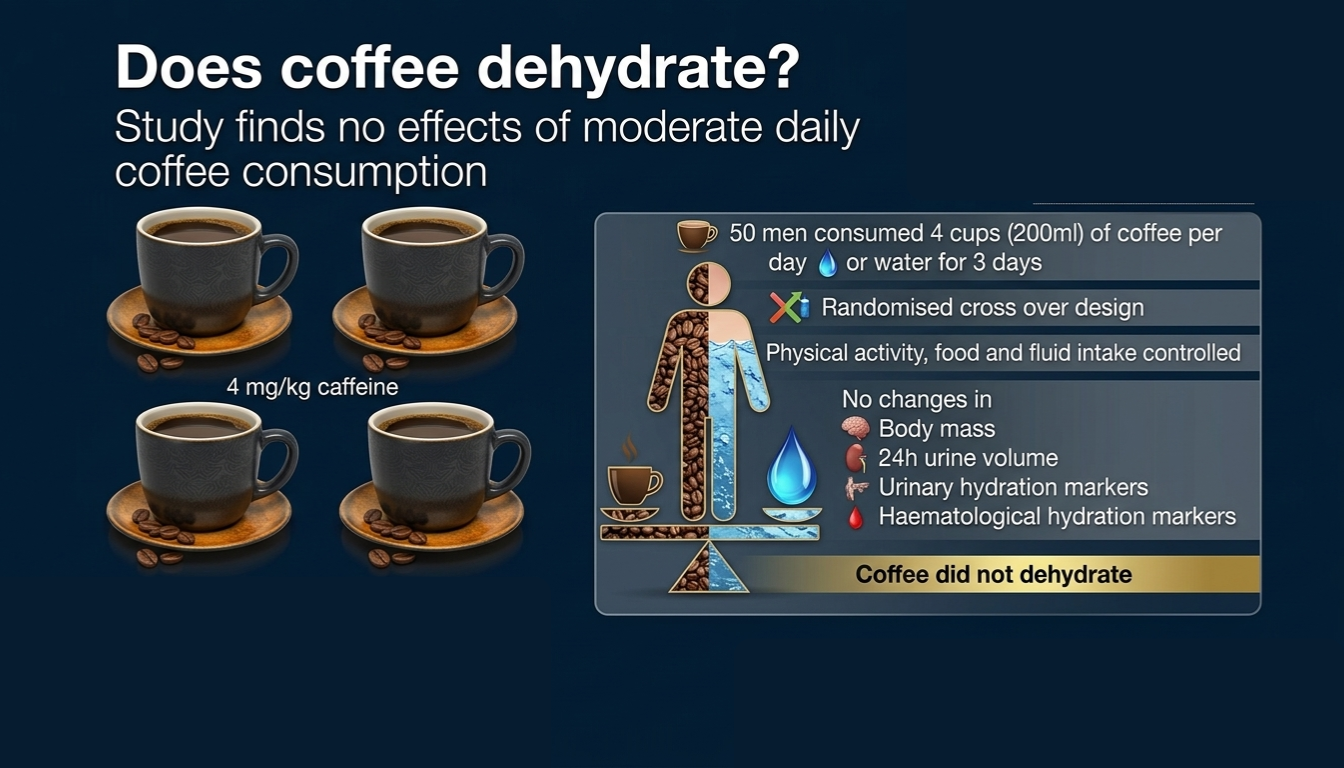
Studies have looked at this directly. Researchers gave people coffee and plain water on different days and measured their hydration levels. The results were pretty clear. Moderate coffee drinking does not cause dehydration. The fluid you get from coffee mostly cancels out the fluid you lose from the mild diuretic effect.
One well-known study published in the journal PLOS ONE looked at men who drank three to six cups of coffee per day. Their hydration levels were the same as when they drank only water. Coffee counted toward their daily fluid intake just fine.
Does Coffee Count as a Fluid for the Day?
Yes, it does.
Health experts used to say coffee doesn’t count toward your daily fluid goals. That was based on the diuretic idea. But that advice has quietly changed over the years.
The European Food Safety Authority says caffeinated drinks like coffee do contribute to your total fluid intake. The Institute of Medicine in the US also acknowledges that coffee adds to your hydration, not takes away from it.
So if your goal is eight cups of fluid a day, your morning coffee counts. Not in the same way as pure water, but it still adds up.
When Can Coffee Actually Cause Problems?
This is where we need to be honest. Coffee is not a perfect hydration drink. There are situations where it can cause issues.
Here are a few things to watch for:
- Drinking coffee on an empty stomach can make some people feel worse and add stress to the body.
- Drinking very large amounts (more than five or six cups a day) can push the diuretic effect to a point where it matters more.
- Hot weather or heavy exercise means your body is already losing more fluid through sweat. Adding a lot of coffee in these situations is not ideal.
- Some people are more sensitive to caffeine than others. If you feel jittery or your heart races, your body is reacting more strongly.
- Drinking coffee instead of water all day is not the same as staying hydrated. Coffee is fine as part of your fluid intake, but plain water still matters.
What About That Urgent Feeling After Coffee?
A lot of people notice they need to use the bathroom pretty quickly after drinking coffee. That feels like dehydration, right?
Not exactly. Coffee does speed things up in your gut. It stimulates movement in your digestive system. That can make you feel the urge faster. But that is not the same as your body losing dangerous levels of water.
The urgency is real. The dehydration part is mostly a myth, at least for normal amounts of coffee.
Caffeine Tolerance Changes Things
Here is something interesting. If you drink coffee regularly, your body adjusts.
People who drink coffee every day develop a tolerance to caffeine’s diuretic effect. Their bodies stop reacting as strongly to it. So a person who drinks coffee daily actually loses less fluid from it than someone who drinks it only once in a while.
This is one reason why the dehydration concern is smaller than many people believe for regular coffee drinkers.
Signs You Might Actually Be Dehydrated
It is easy to blame coffee when you feel off. But actual dehydration has pretty clear signs. Check this list:
- Dark yellow or orange urine
- Feeling very thirsty
- Dry mouth or dry lips
- Headache that will not go away
- Feeling dizzy or lightheaded
- Feeling tired for no clear reason
- Not needing to pee much at all
If you have several of these signs, drink more plain water. Do not blame the coffee unless you are drinking huge amounts. Most of the time, dehydration comes from not drinking enough total fluids throughout the day.
How Much Coffee Is Actually Fine?
Most adults can drink three to four cups of coffee a day without any hydration issues. That is roughly 300 to 400 milligrams of caffeine. Some people do fine with a bit more. Some people are more sensitive and do better with less.
The problems start when people drink coffee instead of water, skip other fluids, and then wonder why they feel off. Coffee can be part of a healthy hydration routine. It just cannot be the whole thing.
What Helps You Stay Hydrated Better
If you want to stay well hydrated, here are some simple things that actually work:
- Start your day with a glass of plain water before your coffee
- Drink water between cups of coffee, not just coffee all morning
- Eat fruits and vegetables, they carry a lot of water in them
- Keep a water bottle somewhere you can see it
- Check your urine color through the day, pale yellow is the goal
- Drink more water when it is hot or when you exercise
Coffee fits nicely into this routine. It does not have to fight against it.
The Myth Probably Started Here
A lot of older health advice came from a 1928 study that looked at caffeine’s effect on urine output. That study became the basis for telling people to avoid coffee if they wanted to stay hydrated.
But science has moved on. We have much better studies now with bigger groups of people and better measurements. Those newer studies consistently show that moderate coffee drinking is not a hydration problem.
The old advice stuck around because it sounded reasonable. Coffee makes you pee, peeing loses water. People repeated it and it became common knowledge. But common knowledge is not always right.
Coffee Myths That Confuse People
Myth 1: Coffee Removes More Water Than It Gives
This is false for normal coffee intake. Coffee still adds fluid to the body.
Myth 2: Every Caffeinated Drink Causes Dehydration
Not true. Many caffeinated drinks still support hydration overall.
Myth 3: Only Water Counts for Hydration
Other drinks and foods help too.
Myth 4: Dark Coffee Is More Dehydrating
Roast color does not strongly change hydration effects.
Black Coffee vs. Coffee Drinks
One more thing worth mentioning. Plain black coffee is mostly water and caffeine. The hydration story is pretty simple there.
But fancy coffee drinks are different. A large sweetened coffee drink with cream, syrup, and extra shots has a lot of sugar and calories. That does not mean it dehydrates you, but it does mean you are drinking something that affects your body in other ways. Those drinks are fine as treats, not as your main source of daily fluid.

Also, adding a lot of sugar to your coffee can make you feel thirstier. Not because of the coffee itself, but because sugar pulls fluid into your digestive system.
So, Does Coffee Dehydrate You?
Let’s bring it all together.
For most people drinking a normal amount of coffee each day, no, coffee does not dehydrate you. The water in coffee more than makes up for the mild diuretic effect of caffeine. Your body stays hydrated. Coffee counts toward your daily fluid needs.
The situations where coffee might contribute to dehydration are limited:
- Drinking extremely large amounts every day
- Drinking coffee as your only fluid
- Already being dehydrated and continuing to skip water
- Being very sensitive to caffeine
Outside of those situations, your morning coffee is fine. Your afternoon cup is fine too.
The idea that coffee is bad for hydration is mostly an old myth that never fully went away. Researchers have looked at it carefully, and the answer keeps coming back the same. Moderate coffee drinkers are just as well hydrated as people who only drink water.
The Bottom Line
Coffee gets blamed for a lot of things. Some of that blame is deserved. Too much caffeine can mess with your sleep. Some people feel anxious after drinking it. It can irritate a sensitive stomach.
But dehydration? For normal amounts? That is not really the coffee’s fault.
Drink your coffee. Drink some water too. Eat some fruits and vegetables. Check that your urine is a normal pale yellow. That is really all you need to do.
You do not need to feel guilty about your morning cup. It is not drying you out. It is mostly just coffee.
Frequently Asked Questions
Can I count my morning coffee as part of my daily water intake?
Yes, you can. Coffee is about 98% water. Health authorities like the European Food Safety Authority confirm that caffeinated drinks do count toward your daily fluid goals. Your morning cup is not a free pass to skip water, but it does add up.
Does coffee dehydrate you if you drink it every day?
No, regular coffee drinkers actually handle it better than occasional drinkers. Your body builds a tolerance to caffeine over time. That means the mild diuretic effect gets weaker the more consistently you drink coffee. Daily drinkers lose less fluid from it than people who only have it once in a while.
Why do I feel so thirsty after drinking coffee sometimes?
A few things could cause that. If your coffee had a lot of sugar or syrup, that pulls fluid into your digestive system and makes you feel dry. You might also just be thirsty from not drinking enough water earlier in the day. Black coffee on its own should not make you feel that way.
How much coffee is too much when it comes to hydration?
Most adults are fine with three to four cups a day. Around five or six cups is where the diuretic effect starts to matter more. Past that point, you are drinking enough caffeine that your body struggles to hold onto fluid as easily. Staying under 400 milligrams of caffeine daily keeps things balanced for most people.
Is coffee bad for hydration when you exercise or it is hot outside?
It is not the best choice as your main drink during heavy exercise or in the heat. Your body is already sweating and losing fluid fast. Coffee is fine before a workout, but during and after, plain water or an electrolyte drink works much better. Save the coffee for when your body is not already working hard to cool down.